
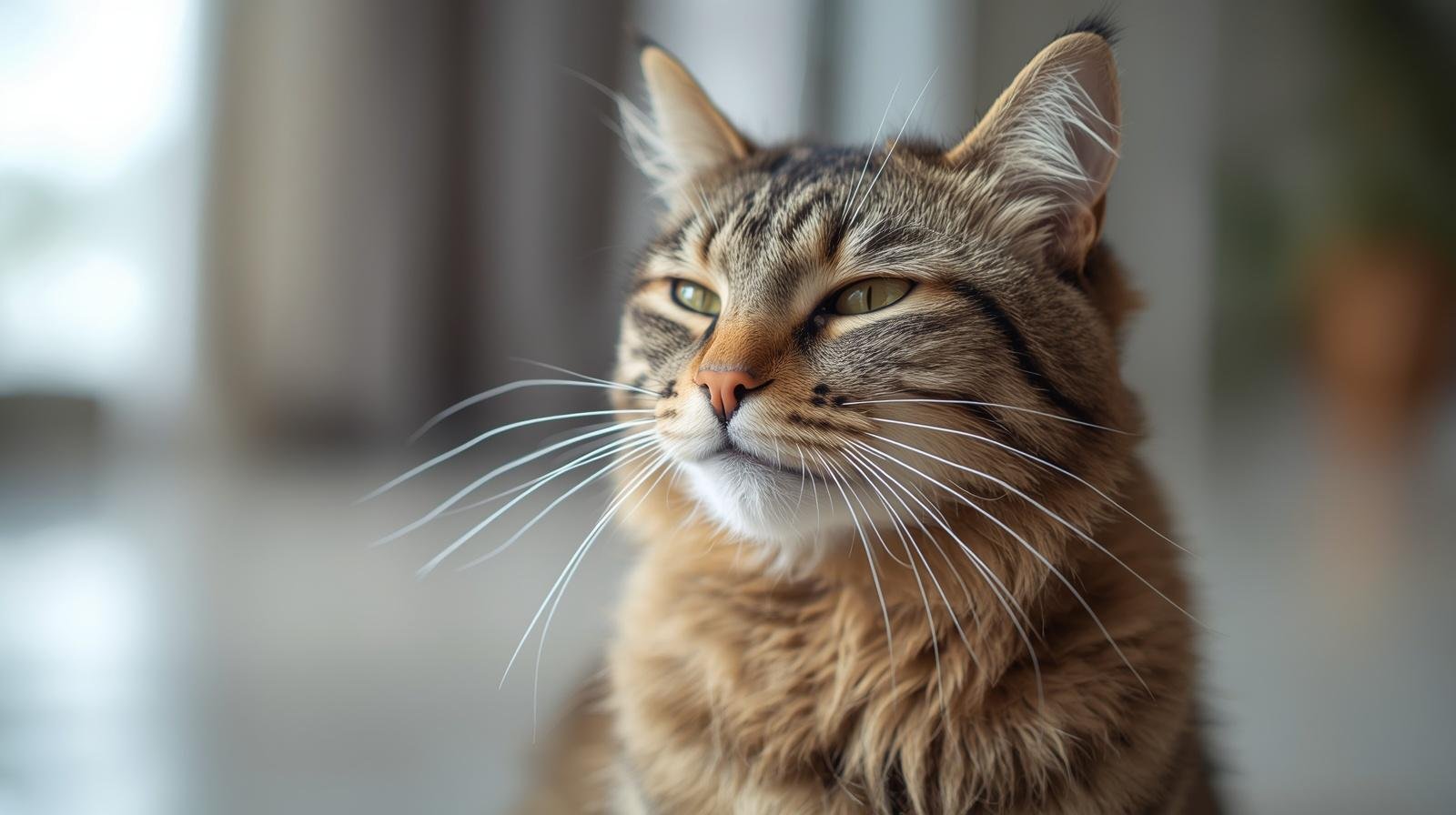
The first time Luna had a sneezing fit, I thought it was adorable.
She was sitting on the windowsill, sniffing a flower I had just brought inside. Her little nose twitched. Then: Ah-choo! Ah-choo! Ah-choo-choo-choo! Three sneezes in a row, followed by a confused blink and a head tilt.
I laughed. I took a video. I sent it to my mom with the caption “Luna has allergies now I guess?”
But then it kept happening.
The next day: three sneezes in the morning. The day after: five sneezes while eating. Then a week went by, and she was sneezing multiple times every single day. Sometimes just one sneeze. Sometimes a whole fit. Sometimes clear liquid would spray out of her nose (gross, but informative).
I stopped laughing. I started worrying.
Is this normal? Is she sick? Is it the flower? Is it the litter? Is it the dust from the construction next door? Is she dying? (My brain always goes to dying.)
I spent weeks obsessively watching her. Checking her nose. Feeling her ears. Monitoring her appetite. She was eating fine. Playing fine. Napping fine (which is always, because she’s a cat). But the sneezing wouldn’t stop.
Sound familiar?
If your cat has been sneezing multiple times a day—for days or weeks—you’re probably in the same place I was. You’re not sure if it’s an emergency, an annoyance, or just… a cat being a cat.
Let me walk you through what I learned after talking to vets, researching feline respiratory health, and monitoring Luna’s sneezes like a hawk. Because the answer is different depending on the cause. And the cause isn’t always obvious.
First, What’s “Normal” Sneezing?
Cats sneeze occasionally. Just like humans.
Normal sneezing:
- One or two sneezes, once in a while
- Triggered by something obvious (dust, strong smell, tickle in the nose)
- Cat is otherwise fine (eating, playing, no discharge)
- Sneezes stop within a day or two
Chronic sneezing (what this article is about):
- Sneezing multiple times a day, every day
- Continues for more than a week (often weeks or months)
- May or may not have other symptoms
- Doesn’t seem to have an obvious trigger
If your cat sneezes occasionally, don’t worry. That’s normal. If your cat sneezes daily (or multiple times daily), keep reading.
The Two Main Culprits: Allergies vs. Infection
Most chronic sneezing in cats comes down to one of these two categories. But they look different, feel different, and require different treatments.
| Sneezing pattern | Seasonal or constant | Often constant |
| Nasal discharge | Clear, watery | Yellow, green, or bloody |
| Other symptoms | Itchy skin, watery eyes, no fever | Lethargy, fever, eye discharge, poor appetite |
| Contagious to other cats | No | Yes (viral) |
| Response to antihistamines | Often improves | No improvement |
| Response to antibiotics | No improvement | May improve (if bacterial secondary infection) |
Let me break down each one in detail.
Cause 1: Upper Respiratory Infection (The Most Common)
This is the big one. Most chronic sneezing in cats is caused by a viral infection, usually one they caught as a kitten and never fully cleared.
What’s happening: Your cat has a chronic viral infection. The most common culprits are Feline Herpesvirus (FHV-1) and Feline Calicivirus (FCV) . These are like the cat version of cold sores or the common cold—once a cat gets them, the virus stays in their body for life.
Most of the time, the virus is dormant (inactive). But during times of stress, the virus flares up, causing sneezing, eye discharge, and other respiratory symptoms.
Common triggers for flare-ups:
- Moving to a new home
- New pet or family member
- Boarding or vet visit (stressful!)
- Change in routine
- Underlying illness
What it looks like:
- Sneezing fits (multiple sneezes in a row)
- Clear, watery nasal discharge (at first)
- Discharge may turn yellow or green if secondary bacterial infection develops
- Squinting or watery eyes
- Lethargy (during flare-ups)
- Decreased appetite (if they can’t smell their food)
Real story: My friend’s cat, Mochi, sneezes every spring. For years, she thought it was seasonal allergies. She tried air purifiers, changed his litter, even gave him antihistamines (with vet approval). Nothing worked.
Finally, a vet ran a PCR test on a nasal swab. Mochi had Feline Herpesvirus. His “spring allergies” were actually stress-induced flare-ups triggered by the neighbor’s cat roaming outside his window. Once she started using Feliway diffusers and blocking his view of the yard, the sneezing decreased by 90%.
Treatment for viral respiratory infections:
- L-lysine supplement (may help reduce herpesvirus replication—evidence is mixed, but many vets still recommend it)
- Supportive care (warm, steamy bathroom to loosen congestion)
- Appetite stimulants (if they can’t smell food)
- Antibiotics (only if secondary bacterial infection develops)
- Antiviral medication (for severe cases—famciclovir)
Prevention: Vaccination reduces the severity of FHV-1 and FCV, but doesn’t prevent infection entirely. Most cats are exposed as kittens.
Cause 2: Allergies (Less Common Than You Think)
Here’s something that surprised me: Respiratory allergies in cats are actually pretty rare.
Unlike humans (who sneeze at pollen) and dogs (who get hay fever), cats with allergies usually have skin symptoms—itching, overgrooming, bald spots, scabs. Respiratory allergies do happen, but they’re not the first thing vets suspect.
What’s happening: Your cat’s immune system overreacts to something in the environment (pollen, dust mites, mold, perfume, cigarette smoke) and releases histamine, causing sneezing, watery eyes, and nasal irritation.
What it looks like:
- Sneezing (often seasonal, but can be year-round)
- Clear, watery nasal discharge (never yellow or green)
- Itchy skin (scratching, overgrooming)
- Watery eyes
- No fever, no lethargy, normal appetite
Common cat allergens:
- Pollen (trees, grass, weeds)
- Dust mites
- Mold spores
- Perfume or scented candles
- Cigarette smoke
- Litter dust (especially clay or scented litters)
- Cleaning products (sprays, floor cleaners)
Real story: A client had a Siamese cat named Kona who sneezed violently every time she cleaned the bathroom. The owner thought Kona had a chronic infection. Turned out, Kona was allergic to bleach fumes. Once the owner switched to a natural, fragrance-free cleaner, the sneezing stopped completely.
Treatment for allergies:
- Remove the allergen (switch litter, stop using scented products, run an air purifier)
- Antihistamines (only under vet guidance—dosage is tricky in cats)
- Corticosteroids (for severe cases)
- Immunotherapy (allergy shots—expensive but effective)
The at-home test: Take your cat into the bathroom, close the door, and run a hot shower. The steam will loosen nasal congestion. Wait 10 minutes. If the sneezing improves temporarily, it’s more likely an infection (steam helps clear mucus). If the sneezing stays the same or gets worse, it could be allergies (humidity can stir up dust mites and mold).
Cause 3: Nasal Polyps (The Overlooked One)
This one is less common, but it’s important because it’s treatable.
What’s happening: Your cat has a benign (non-cancerous) growth inside their nasal passage. The polyp irritates the nasal lining and blocks airflow, causing chronic sneezing, snoring, and noisy breathing.
What it looks like:
- Chronic sneezing (often on one side only)
- Noisy breathing (stridor or snoring)
- Nasal discharge from only one nostril
- Reverse sneezing (gasping inward, like they’re trying to suck something back)
- In severe cases: difficulty breathing, voice change
Which cats are at risk: Any cat, but polyps are more common in young cats (under 2 years) and senior cats.
Diagnosis: A vet will sedate your cat and look up their nose with a scope (rhinoscopy). They might also do X-rays or a CT scan.
Treatment: Surgical removal. Polyps often grow back, but removal provides significant relief for months or years.
Real story: A client’s 1-year-old Maine Coon, Finnegan, had been sneezing since he was a kitten. Every vet said “kennel cough” or “herpesvirus.” Nothing worked. Finally, a specialist did a rhinoscopy. Finnegan had a nasal polyp the size of a pea. Surgery removed it. He stopped sneezing within a week.
Cause 4: Dental Disease (The Hidden Culprit)
This one surprises most cat owners. But it’s surprisingly common.
What’s happening: Your cat has a tooth root abscess or severe gum disease. The infection from the tooth can spread upward into the nasal passage (the roots of the upper teeth are very close to the nasal cavity). The result? Chronic sneezing, often with foul-smelling discharge from one nostril.
What it looks like:
- Sneezing (often from one side)
- Nasal discharge that smells bad (like rotting teeth)
- Drooling or pawing at the mouth
- Bad breath (worse than normal cat breath)
- Difficulty eating (chewing on one side)
- Weight loss (in severe cases)
Which cats are at risk: Senior cats, cats with no dental care, cats with resorptive lesions (painful tooth lesions common in cats).
Diagnosis: Dental X-rays (regular X-rays often don’t show tooth root abscesses—they need specialized dental radiographs).
Treatment: Tooth extraction (of the affected tooth) and antibiotics.
Real story: A client’s 12-year-old rescue cat, Oliver, had been sneezing for six months. His owner thought it was allergies. Multiple vets said “chronic herpesvirus.” Finally, a vet did dental X-rays. Oliver had a tooth root abscess that had eroded into his nasal cavity. The tooth was extracted. The sneezing stopped within 48 hours.
Lesson: If your cat has chronic sneezing and bad breath, start with a dental exam. It might save you months of chasing the wrong diagnosis.
Cause 5: Fungal Infections (Rare but Serious)
This is the scary one, but it’s also the rarest. Unless you live in certain parts of the country, your cat probably doesn’t have a fungal infection.
What’s happening: Your cat inhaled fungal spores from the environment. The most common culprit is Cryptococcus (found in soil, bird droppings, and especially pigeon droppings). The fungus grows in the nasal passage and can spread to the brain.
What it looks like:
- Chronic sneezing (often violent)
- Thick, bloody, or mucus-y nasal discharge (often from one nostril)
- A firm bump or swelling on the bridge of the nose
- Eye changes (third eyelid protruding, bulging eye)
- Neurological signs (head tilt, circling, seizures—in advanced cases)
Which cats are at risk: Outdoor cats, cats in certain geographic areas (Pacific Northwest, Southern California, Texas, Midwest). Any age, any breed.
Diagnosis: Nasal swab, blood test (antigen testing), or biopsy.
Treatment: Antifungal medication (fluconazole, itraconazole). Treatment lasts months and is expensive, but the prognosis is good if caught early.
If you live in an area with cryptococcus and your cat has bloody nasal discharge, see a vet immediately. This is not something to wait on.
The “When to Worry” Decision Guide
Not all sneezing is an emergency. But some sneezing is.
Call your vet TODAY if your cat is sneezing AND:
| Thick yellow or green nasal discharge | Bacterial infection (needs antibiotics) |
| Bloody nasal discharge | Fungal infection, tumor, or severe inflammation |
| Sneezing from only one nostril | Polyp, foreign object, or tooth root abscess |
| Difficulty breathing (open-mouth breathing, wheezing) | Respiratory distress—this is an emergency |
| Not eating for 24+ hours | Cats can get hepatic lipidosis (fatty liver) if they don’t eat |
| Lethargy (won’t play, sleeps all day) | Systemic illness |
| Fever (ears warm, lethargic) | Infection |
| Swelling on the bridge of the nose | Fungal infection or tumor |
Schedule a non-emergency vet visit this week if:
- Sneezing has been going on for more than 2 weeks
- Sneezing is daily but cat is otherwise normal
- You have other cats in the house (they may need testing)
- Your cat is a senior (over 10 years)
You probably don’t need a vet if:
- Sneezing is occasional (once a day or less)
- Discharge is clear and watery
- Cat is eating, playing, and acting normal
- You can identify a trigger (new litter, perfume, dust from cleaning)
At-Home Remedies That Actually Help
While you’re waiting for the vet or managing a chronic condition, here’s what you can do at home.
Remedy 1: Steam Therapy
What to do: Run a hot shower. Close the bathroom door. Bring your cat into the bathroom (in their carrier or on a towel) for 10-15 minutes. The steam loosens nasal congestion.
How often: Twice daily during flare-ups.
Safety: Never leave your cat unattended in a hot bathroom. Don’t let them near hot water.
Remedy 2: Warm, Smelly Food
Cats with stuffy noses can’t smell their food. If they can’t smell it, they won’t eat it (cats are weird like that).
What to do: Warm up canned food for 5-10 seconds in the microwave (stir well—no hot spots!). The heat releases aroma. Add a little tuna water or low-sodium chicken broth.
Why it works: The stronger the smell, the more likely your cat will eat despite the congestion.
Remedy 3: Saline Nasal Drops (Vet Approval First)
What to do: Ask your vet for a pet-safe saline nasal spray. One drop in each nostril, twice daily. This loosens dried mucus.
Never use: Medicated human nasal sprays (Afrin, Flonase, etc.). They can be toxic to cats.
Remedy 4: Air Purifier
What to do: Run a HEPA air purifier in the room where your cat spends the most time.
Why it works: Removes dust, pollen, mold spores, and other airborne irritants.
Real story: Luna’s sneezing decreased by about 50% when I added an air purifier to the bedroom. She still sneezes (she has herpesvirus), but it’s less intense.
Remedy 5: L-Lysine (Debated but Worth Trying)
What it is: An amino acid supplement that may help reduce feline herpesvirus replication.
The evidence: Mixed. Some studies show benefit. Others show no effect. Many vets still recommend it because it’s safe and cheap.
Dosage: 250-500 mg per day for an adult cat. Available as a powder, treat, or gel.
Real story: Luna gets 500 mg of L-lysine powder in her food every day. Does it work? I’m not sure. But she hasn’t had a major herpes flare-up in two years. I’m not going to stop.
What to Tell Your Vet (Be Specific)
When you go to the vet, they’re going to ask you questions. Be prepared with answers.
Bring this information:
- How long has the sneezing been happening? (Days? Weeks? Months?)
- How often does your cat sneeze? (Once a day? Multiple times an hour?)
- What does the discharge look like? (Clear? Yellow? Green? Bloody? One nostril or both?)
- Any other symptoms? (Eye discharge? Lethargy? Not eating? Drooling?)
- Any triggers you’ve noticed? (After cleaning? After using litter? Seasonal?)
- Is your cat indoor-only or indoor/outdoor?
- Do you have other cats? Are they sneezing too?
- Is your cat vaccinated? (For herpesvirus, calicivirus)
Bring a video. I cannot stress this enough. Film your cat sneezing. Show the vet. It’s more useful than your description.
FAQ
Can cats have seasonal allergies like humans?
Yes, but it’s less common. Cats with seasonal allergies usually have itchy skin, not sneezing. Respiratory allergies do happen, but they’re not the first thing vets suspect. If your cat sneezes only in spring and has no other symptoms, allergies are possible.
My cat sneezes after eating. Is that normal?
Sometimes. Cats who eat too fast or have dental issues may sneeze after meals. If it’s occasional, don’t worry. If it’s every meal, check your cat’s teeth and consider a slow feeder bowl.
Can stress cause sneezing in cats?
Yes. Stress triggers flare-ups of latent viral infections (herpesvirus). If your cat sneezes more after a stressful event (moving, new pet, boarding), it’s likely viral, not allergic.
My cat sneezes and has a runny nose but acts fine. Do I need the vet?
If it’s been less than a week, monitor. If it’s been more than 2 weeks, see a vet. Chronic sneezing can indicate a dental problem, polyp, or fungal infection that won’t resolve on its own.
Is cat sneezing contagious to humans?
No. The viruses that cause sneezing in cats (herpesvirus, calicivirus) do not infect humans. You’re safe. Your other cats are not safe—keep sneezing cats separated from non-sneezing cats.
Can I give my cat human allergy medicine?
No. Never give your cat any medication without vet approval. Many human antihistamines (like those containing decongestants) are toxic to cats. Even “safe” ones require precise dosing.
Final Thoughts: Luna’s Happy Ending
Luna still sneezes. Every day, usually two or three times. Sometimes more.
I took her to the vet. We ran tests. We ruled out dental disease, polyps, fungal infection, and cancer. The diagnosis: chronic feline herpesvirus. She likely caught it as a kitten at the shelter. It lives in her body forever.
But here’s what I’ve learned: Chronic doesn’t mean miserable.
Luna’s sneezes don’t bother her. She doesn’t know they’re not normal. She eats, plays, naps, and demands treats with the same enthusiasm as any cat. The sneezing is just… part of her. Like her weird obsession with licking plastic bags (that’s a whole other article).
I still watch her. I still check her nose. I still take videos to compare with old ones. But I don’t panic anymore.
Because I know the difference between “Luna being Luna” and “something is wrong.”
And now you do too.
If your cat has been sneezing for weeks and you’ve been worrying—take a breath. Most chronic sneezing is not an emergency. It’s a virus. Or a dental issue. Or a polyp. All treatable. All manageable.
But if you’re still worried? Call your vet. That’s what they’re there for.
And in the meantime, give your sneezy cat a gentle scratch behind the ears. They don’t know they’re worrying you. They just know they love you.
Even if they sneeze on your face sometimes.
Does your cat have chronic sneezing? What was the cause? Share your story in the comments—I read every single one, and your experience might help another worried cat parent.