
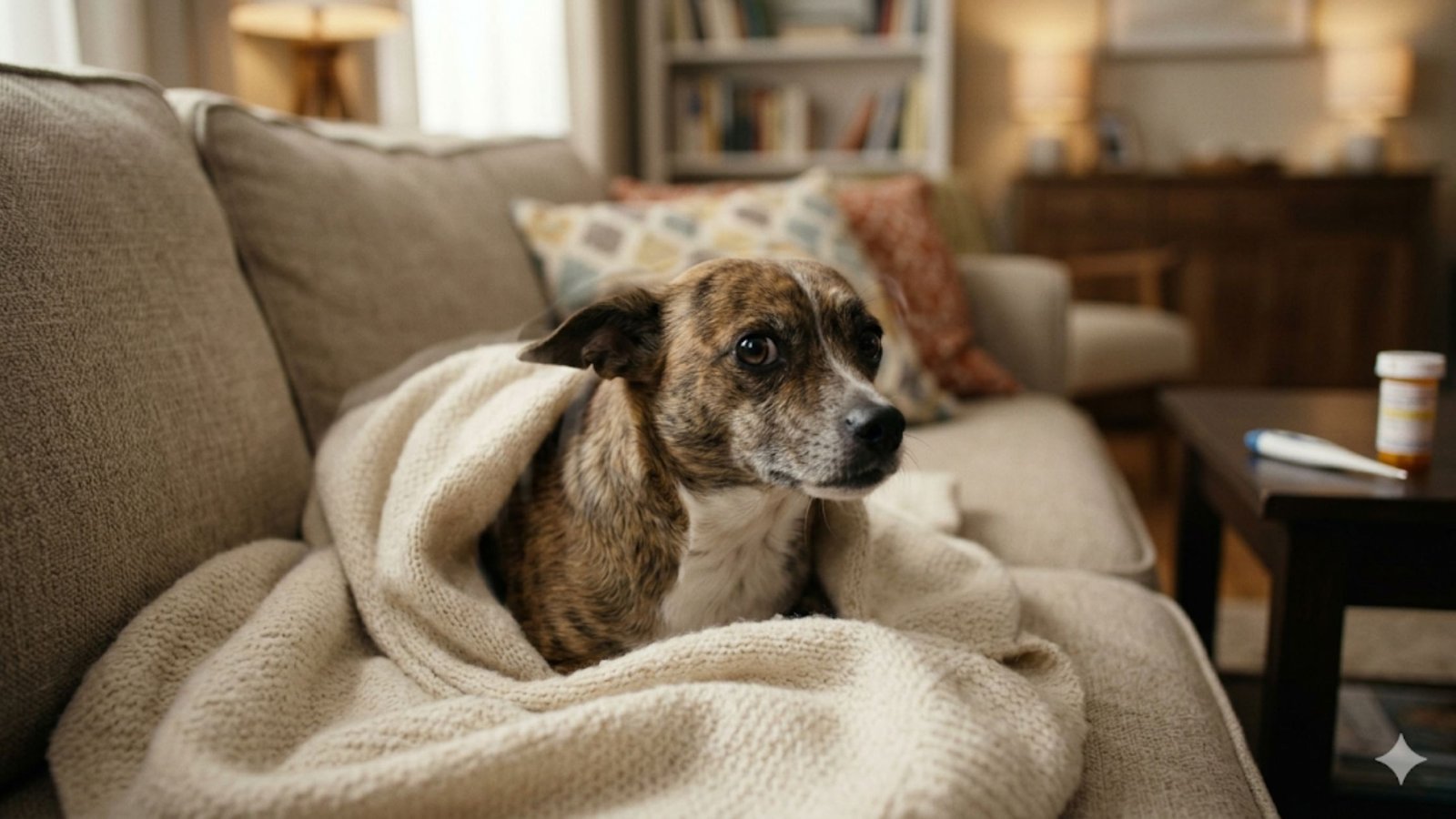
The first time Finn shivered when it wasn’t cold, I convinced myself he was dying.
It was a Tuesday afternoon in July. Outside, it was 88 degrees. Inside, my air conditioner was humming, set to a comfortable 72. Finn, my 4-year-old Golden Retriever, was lying on his orthopedic bed, completely relaxed.
And then he started trembling.
Not his whole body. Just his back legs. A fine, rapid tremor that made the fur on his thighs quiver. He wasn’t panting. He wasn’t acting scared. He was just… shivering.
My brain went to the worst place immediately. Neurological disorder. Poison. Internal bleeding. Something terrible.
I rushed him to the emergency vet. I was crying. The intake nurse was very kind but also very calm. She took Finn’s temperature, listened to his heart, checked his gums.
Then she looked at me and said, “He has a mild fever and he’s a little dehydrated. Has he been playing hard?”
Yes. Yes, he had. We had spent an hour at the dog park that morning, and he had run himself ragged chasing a tennis ball.
Finn wasn’t dying. He was exhausted and sore. The shivering was his muscles twitching after overexertion. A cool drink, a nap, and some electrolyte solution, and he was fine.
I felt like an idiot. Again.
But here’s what I learned from that experience: Dog shivering is complicated. Sometimes it’s nothing. Sometimes it’s an emergency. And the difference isn’t always obvious.
If you’re reading this, your dog is probably shivering right now, or has been shivering lately, and you can’t figure out why. The house isn’t cold. They’re not scared (as far as you can tell). They’re just… shaking.
Let me walk you through the five hidden medical reasons vets want you to know about. Because the first time I saw Finn shiver for no obvious reason, I had no idea how many possibilities there were. Now you will.
First, Let’s Talk About Normal Shivering
Not all shivering is a medical emergency. Sometimes it’s just… dog stuff.
Normal reasons dogs shiver:
- They’re cold (obvious, but worth stating)
- They’re excited (you just picked up their leash)
- They’re anxious (thunderstorm, fireworks, vet visit)
- They’re dreaming (those little twitches during REM sleep)
- They’re old (senior dogs often have benign tremors, especially in the back legs)
What normal shivering looks like:
- It stops when the trigger stops (you put the leash down, the thunder passes, you turn up the heat)
- Your dog acts normal otherwise (eating, drinking, playing, pooping)
- Your dog is responsive (they look at you when you say their name)
What shivering looks like:
- It happens for no apparent reason (room temperature is fine, no obvious trigger).
- It continues even when you comfort your dog.
- Your dog seems “off” in other ways (lethargic, not eating, vomiting, hiding).
- Your dog doesn’t respond to you normally.
If you’re in the “concerning” category, keep reading. If you’re in the “normal” category? Your dog is probably fine. But read on anyway—knowledge is power.
Hidden Reason 1: Pain (The Most Overlooked Cause)
This is the big one. And it breaks my heart how often it’s missed.
What’s happening: Your dog is in pain. Shivering is one of the few ways they can show it. Dogs are masters of hiding pain—it’s an evolutionary survival mechanism. In the wild, a dog who shows weakness gets eaten. So they suffer in silence.
But shivering? That’s harder to hide. Pain causes muscle tension, which causes trembling. It’s an involuntary response.
Types of pain that cause shivering:
| Arthritis or joint pain | Shivering in back legs, stiffness getting up, limping |
| Muscle strain | Shivering after exercise (like Finn), soreness when touched |
| Dental pain | Jaw trembling, drooling, eating on one side of the mouth |
| Abdominal pain | Shivering + hunched posture, crying when picked up |
| Back pain (IVDD) | Shivering + reluctance to jump, yelping when moving |
Real story: A client brought me her 9-year-old Lab mix, Daisy. Daisy had been shivering for three weeks. The owner thought she was anxious. She tried calming supplements, a ThunderShirt, even anxiety medication. Nothing worked.
I asked the owner to film Daisy when she thought no one was watching. The video showed Daisy struggling to get up from her bed. She would brace herself, shiver, then finally push up.
Vet visit: Severe hip dysplasia and arthritis. Daisy wasn’t anxious. She was in constant pain. Pain medication stopped the shivering within 48 hours.
What to do: If your dog is shivering and also showing any of these signs, see a vet:
- Reluctance to jump on furniture or go up stairs
- Stiffness after lying down (the “warming up” walk)
- Limping or favoring a leg
- Yelping when touched in a certain area
- Changes in posture (hunched back, head lowered)
The home test: Gently run your hands along your dog’s spine, legs, and abdomen. Do they flinch? Pull away? Tense up? That’s pain.
Hidden Reason 2: Generalized Tremor Syndrome (GTS)
This one sounds scary, but it’s actually not an emergency. It’s also not well-known, even among some vets.
What’s happening: Generalized Tremor Syndrome (also called steroid-responsive tremor syndrome or “little white shaker syndrome”) causes full-body tremors in dogs. Despite the nickname, it affects dogs of all colors and sizes.
Which dogs get it:
- Small breeds (Westies, Maltese, Poodles, Bichons) are most common
- But any dog can develop it
- Usually appears between 1-4 years of age
What it looks like:
- Fine, rapid, full-body tremors (like the dog is vibrating).
- Tremors worsen with excitement or stress.
- Tremors stop when the dog sleeps.
- The dog is otherwise completely normal (eating, playing, alert)
The good news: GTS is highly treatable. Most dogs respond within days to low-dose steroids (prednisone). Some dogs outgrow it entirely.
Real story: My friend’s West Highland White Terrier, Charlie, started shaking at 2 years old. The vet ran every test—blood work, X-rays, and a neurological exam. Everything was normal. Finally, a specialist diagnosed GTS. Charlie was on prednisone for 3 months. The tremors stopped. He’s 7 now and has never had a relapse.
What to do: If your dog has full-body tremors but is otherwise healthy and alert, ask your vet about GTS. It’s a diagnosis of exclusion (meaning they rule out everything else first), but it’s worth knowing about.
Hidden Reason 3: Metabolic Issues (Blood Sugar, Calcium, Kidneys)
This is where shivering gets serious. Metabolic issues can be life-threatening if not treated.
Low Blood Sugar (Hypoglycemia)
What’s happening: Your dog’s blood sugar drops too low. The brain needs glucose to function. When glucose is low, the nervous system malfunctions, causing shivering, weakness, and eventually seizures.
Which dogs are at risk:
- Toy breed puppies (Yorkies, Chihuahuas, Maltese) under 5 months
- Diabetic dogs on insulin (if they get too much or don’t eat enough)
- Small breeds who go too long without eating
- Dogs with insulin-secreting tumors (rare)
Signs of low blood sugar:
- Shivering or trembling
- Weakness (wobbly walk, can’t jump)
- Lethargy (won’t wake up easily)
- Glazed eyes
- Seizures (in severe cases)
What to do (emergency): If your small breed dog is shivering and weak, rub a small amount of honey, maple syrup, or Karo syrup on their gums. If they improve within 5-10 minutes, it was low blood sugar. Get them to a vet to figure out why.
Low Calcium (Hypocalcemia)
What’s happening: Low blood calcium causes muscle twitching, tremors, and in severe cases, seizures. This is most common in nursing mothers (eclampsia).
Which dogs are at risk:
- Nursing mothers with large litters (days 1-4 after birth are at the highest risk)
- Small breed nursing mothers (Chihuahuas, Yorkies, Miniature Pinschers)
- Dogs with parathyroid issues (rare)
Signs of low calcium:
- Shivering or muscle twitching
- Restlessness and panting
- Stiff gait (walking like a robot)
- Fever
- Seizures
What to do (emergency): If you have a nursing mother dog who is shivering, panting, and acting strange, go to the emergency vet immediately. Eclampsia is fatal if not treated.
Kidney Disease
What’s happening: Chronic kidney disease causes a buildup of toxins in the blood (uremia). These toxins affect the nervous system, causing tremors, weakness, and confusion.
Signs of kidney-related shivering:
- Shivering + increased thirst and urination
- Shivering + bad breath (smells like ammonia)
- Shivering + vomiting or diarrhea
- Shivering + weight loss
- Usually in senior dogs (10+ years)
What to do: Blood work (BUN and creatinine levels) will diagnose kidney disease. It’s not curable, but it’s manageable with diet and medication.
Hidden Reason 4: Neurological Disorders
This is the scariest category, but also the rarest. Most shivering is NOT neurological. But when it is, you need to know.
Canine Distemper (Vaccine-Preventable)
What’s happening: Distemper is a viral disease that attacks the nervous system. It causes “chewing gum tremors”—rhythmic jaw movements that look like the dog is chewing gum.
Other signs of distemper:
- Fever
- Nasal and eye discharge
- Coughing
- Thickened, cracked foot pads (later stages)
- Seizures
The good news: Distemper is rare in vaccinated dogs. If your dog is up-to-date on vaccines, this is extremely unlikely.
The bad news: Distemper is often fatal. If your unvaccinated puppy or dog has “chewing gum” tremors, see a vet immediately.
Essential Tremor Syndrome (Benign)
What’s happening: This is the canine version of essential tremor in humans. It’s a neurological condition that causes tremors but doesn’t affect lifespan or quality of life.
What it looks like:
- Tremors that worsen with movement (action tremors)
- Tremors that stop at rest
- No other neurological signs (normal reflexes, normal behavior)
- Often starts in young adulthood
What to do: This is a diagnosis of exclusion. Your vet will rule out other causes first. Most dogs don’t need treatment unless the tremors interfere with daily life.
Cerebellar Issues
What’s happening: The cerebellum is the part of the brain that coordinates movement. Damage to the cerebellum causes intention tremors (tremors that get worse when the dog tries to do something, like eat or walk toward you).
Other signs:
- Wide-based stance (legs spread apart)
- Head bobbing (especially when eating)
- Clumsy, “drunken” gait
- Normal mental state (alert, responsive)
Causes: Birth defect (cerebellar hypoplasia), infection, inflammation, or tumor.
What to do: See a veterinary neurologist. Some causes are treatable. Others are manageable with supportive care.
Hidden Reason 5: Toxin Exposure (The Silent Emergency)
This is the one that keeps me up at night. Dogs shiver when they’ve been poisoned. And the shivering often starts before other symptoms.
Common toxins that cause shivering:
| Chocolate | Candy, baked goods | Vomiting, diarrhea, fast heart rate, seizures |
| Xylitol | Sugar-free gum, candy, peanut butter | Vomiting, weakness, seizures, liver failure |
| Marijuana (THC) | Edibles, flower, vape cartridges | Wobbliness, drooling, low heart rate, urine dribbling |
| Rat poison (bromethalin) | Rodent baits | Tremors, seizures, paralysis |
| Slug bait (metaldehyde) | Snail/slug pellets | Severe tremors, high fever, seizures |
| Antifreeze (ethylene glycol) | Car coolant | Wobbly gait, vomiting, increased thirst, seizures |
| Certain mushrooms | Lawns, woods | Tremors, seizures, liver failure |
| Compost (tremorgenic mycotoxins) | Rotting food | Panting, tremors, seizures |
Real story: A client’s Lab ate a whole chocolate cake off the counter. The owner thought it was funny. Two hours later, the dog was shivering uncontrollably and had a seizure. Emergency vet: severe chocolate toxicity (the cake was dark chocolate). The dog survived after three days in the ICU. The owner? Never left cake on the counter again.
What to do (emergency): If your dog is shivering AND you know or suspect they got into something, go to the emergency vet immediately. Bring the package if you have it. Time matters.
What if you don’t know? If your dog is shivering and you have no idea why, and they’re also showing any of these signs, go to the vet:
- Vomiting or diarrhea
- Drooling excessively
- Acting weak or wobbly
- Having seizures (even mild ones)
- Acting “drunk” (bumping into things)
The Shivering + Other Symptoms Cheat Sheet
Use this chart to help you decide how urgent the situation is.
| Nothing else, dog acts normal | Low (monitor) | GTS, benign tremor, mild pain |
| Reluctance to move, stiffness | Medium (vet this week) | Arthritis, joint pain |
| Vomiting, diarrhea | High (vet today) | Toxin, metabolic issue |
| Weakness, wobbliness | High (vet today) | Low blood sugar, toxin, neurological |
| Panting, restlessness | Medium-High | Pain, fever, anxiety |
| Drooling, urine dribbling | High (vet today) | Toxin (marijuana, xylitol) |
| Seizures | Emergency (vet NOW) | Toxin, distemper, metabolic crisis |
| Nursing puppies | Emergency (vet NOW) | Eclampsia (low calcium) |
| Senior dog (10+ years) | Medium (vet this week) | Kidney disease, arthritis, cognitive decline |
What to Do While You Wait for the Vet
If you’ve decided your dog needs to see a vet, here’s how to help them in the meantime.
Do:
- Keep them warm (a blanket, even if they’re not cold—shivering burns calories)
- Offer small amounts of water (if they’re alert and not vomiting)
- Keep them calm (quiet room, low lights, no other pets)
- Film the shivering (show the vet—it’s more useful than describing it)
- Note when it started and what changed (did they eat something? play hard? get a vaccine?)
Don’t:
- Give human medication (ibuprofen, acetaminophen—both toxic to dogs)
- Force water or food (if they’re nauseous, this makes it worse)
- Panic (your dog will feed off your anxiety)
- Assume it’s “just anxiety” (rule out medical causes first)
When Shivering Is NOT an Emergency (But Still Worth Knowing)
Some shivering looks scary but is actually benign.
Benign tremors of old age: Many senior dogs develop fine tremors, especially in the back legs. As long as they’re not in pain and can still walk, eat, and play, this is normal aging.
Excitement tremors: Some dogs shiver when they’re really, really happy. Their whole body shakes. It stops when they calm down. This is fine.
Dream shivers: Those little leg twitches and jaw trembles during REM sleep? That’s your dog chasing squirrels in their dreams. Completely normal.
Breed-specific tremors: Some breeds (Boxers, Dobermans, Great Danes) have a higher incidence of benign tremors. If your vet has ruled out other causes, this might just be your dog’s normal.
The Vet Visit: What Tests to Expect
If you take your dog to the vet for shivering, here’s what they’ll probably do.
Step 1: History and Physical Exam
The vet will ask: When did it start? Is it constant or intermittent? Does anything make it better or worse? Any other symptoms? They’ll check your dog’s temperature, heart rate, and do a neurological exam.
Step 2: Blood Work
- Complete blood count (CBC) to check for infection or anemia
- Chemistry panel to check kidney, liver, and pancreas function
- Blood sugar (glucose)
- Calcium levels
Step 3: Additional Tests (if needed)
- X-rays (for pain or arthritis)
- Urinalysis (for kidney disease)
- Toxin screening (if poisoning is suspected)
- MRI or CT scan (for neurological issues—usually referred to a specialist)
Cost: $100-300 for exam + basic blood work. $500-2,000+ for advanced imaging.
FAQ
My dog is shivering but eating and playing normally. Should I worry?
Probably not. If your dog is otherwise acting like themselves, the shivering is likely benign (GTS, excitement, mild pain, or normal tremor). But monitor closely. If it continues for more than a few days, mention it to your vet at their next checkup.
Can anxiety cause shivering without any obvious trigger?
Yes. Some dogs have generalized anxiety that isn’t tied to thunderstorms or fireworks. They may shiver because they’re just… anxious. This is more common in rescue dogs with unknown histories. Anxiety shivering usually stops when you comfort them or give them a safe space (crate, covered bed).
My dog only shivers in the back legs. Is that different from full-body shivering?
Back-leg-only shivering is often related to pain (arthritis, hip dysplasia) or neurological issues (spinal cord compression). It’s worth a vet visit, especially in senior dogs.
Can shivering be a sign of a stroke in dogs?
Yes, but it’s rare. Strokes in dogs usually cause other symptoms: head tilt, circling, loss of balance, rapid eye movements (nystagmus), and sudden behavior changes. Shivering alone is rarely a stroke.
My dog shivered once and hasn’t done it again. Do I need the vet?
Probably not. One isolated shivering episode could be a muscle cramp, a chill, or a dream. If it doesn’t recur and your dog is normal otherwise, just watch and wait.
How do I know if my dog is in pain vs. anxious?
Pain shivering often comes with other signs: reluctance to move, stiffness, flinching when touched, changes in posture (hunched back). Anxious shivering comes with panting, pacing, hiding, or clinginess. But they can look similar. When in doubt, see the vet.
Final Thoughts: You Know Your Dog Best
I’ve told you a lot of scary things in this article. Toxins. Seizures. Kidney disease. I don’t want you to panic every time your dog shivers.
But I also don’t want you to ignore something serious.
Here’s what I’ve learned from eight years of watching dogs (and worrying about my own): You know your dog best.
You know what their normal looks like. You know when they’re being dramatic and when something is genuinely wrong. Trust that instinct.
If your dog shivers but is otherwise fine? Monitor, but don’t panic. If your dog shivers and something feels off—even if you can’t name it—call your vet. That gut feeling has saved more dogs than any diagnostic test.
Finn still shivers sometimes. After a long hike, his back legs tremble. When he’s dreaming, his paws twitch. When I pick up his leash, his whole body shakes with excitement.
I don’t panic anymore. Because now I know the difference between “normal dog being a dog” and “something is actually wrong.”
And now you do too.
Trust yourself. Trust your dog. And when in doubt? Call the vet. That’s what they’re there for.