

Bringing Home a Hurricane of Fluff and Teeth
Let’s be real for a second. You just brought home this adorable little furball. They’re sleepy and sweet, and you’re already planning all the road trips and fetch sessions in your future. And then, bam. They turn into a tiny, fluffy shark with a bladder the size of a walnut, and suddenly your favorite rug is a crime scene.
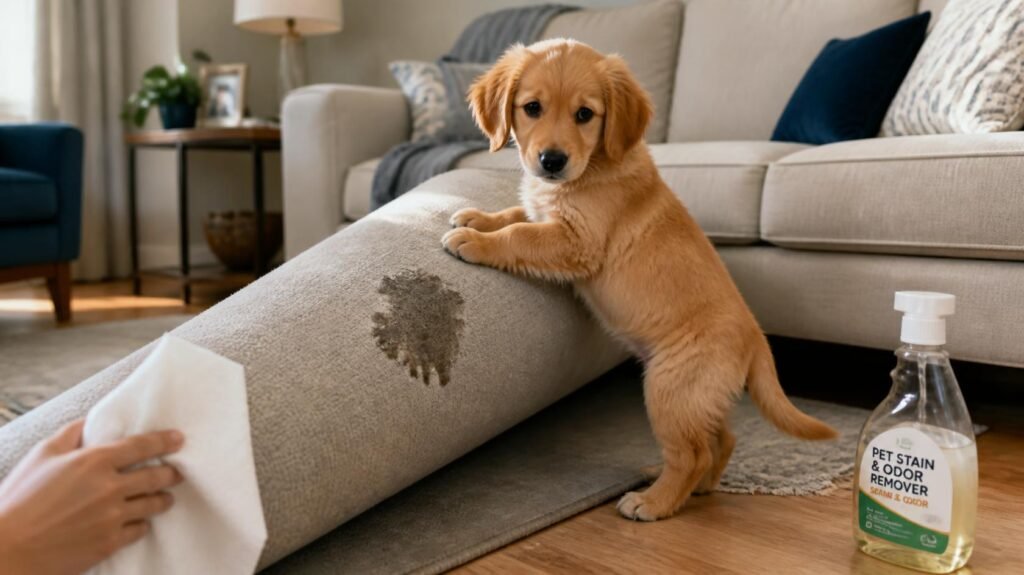
We’ve all been there. Raising a new puppy is a beautiful, chaotic crash course in patience, love, and advanced stain removal. But here’s the good news: those first 30 days aren’t just about surviving; they’re about building the foundation for your dog’s entire life. If you have a complete puppy training roadmap to guide you, this period transforms from overwhelming to exciting. Let’s turn that bundle of energy into a well-mannered family member, one week at a time.
Week 1: Settling In and Building Trust (Days 1–7)
This first week isn’t about teaching tricks; it’s about teaching safety. Your puppy has just been separated from everything they know. They need to learn that you are their new safe place.
The First 24 Hours
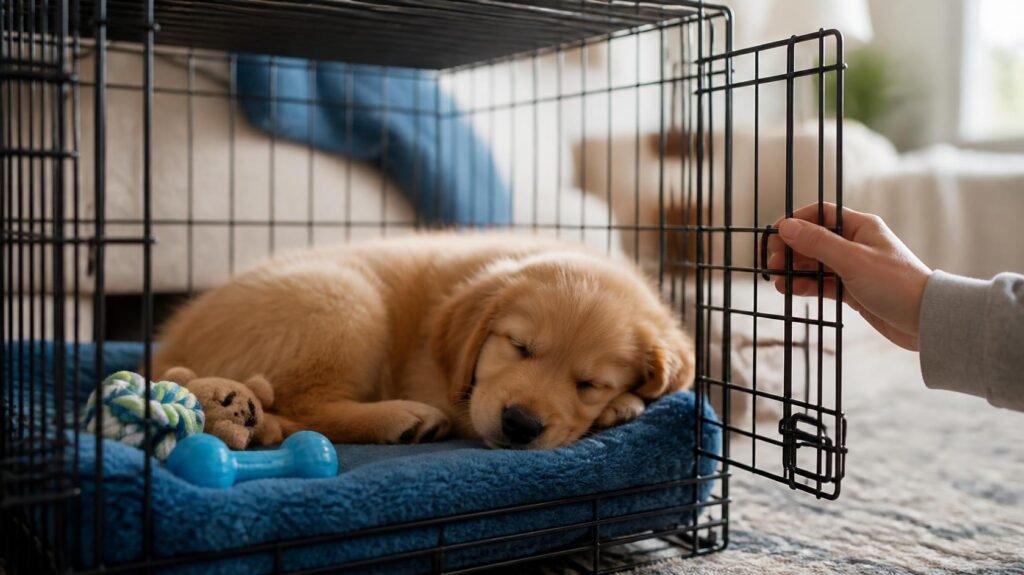
When you get home, keep things low-key. Don’t invite the whole neighborhood over. Let your pup explore one room of the house at a time. This is a good time to start positive associations with their new crate. As the American Kennel Club (AKC) points out, it’s essential that the crate feels like a positive, happy place from the get-go—not a prison. Leave the door open, toss treats inside, and let them explore it on their own terms.
Starting Potty Training Immediately
House training begins the moment you walk in the door. There’s no “waiting until they’re older.” According to certified dog trainers, potty training should start as soon as the puppy comes home. Their bladder control is minimal, so they need to go out often. A good rule of thumb is every hour to two hours, plus immediately after waking up, eating, playing, or drinking.
Pro Tip: When you take them outside to their designated spot, use a consistent cue like “Go potty.” The moment they finish, reward them with a high-value treat and tons of praise. Timing is everything—they need to know the reward comes from doing their business outside.
Week 2: The Rhythm of Routine (Days 8–14)
Now that the initial shock has worn off, it’s time to get into a groove. Dogs thrive on predictability.
Mastering the Crate
By now, you should be working on getting your pup comfortable with the crate. The goal isn’t to lock them in for hours but to teach them that the crate is a safe den where good things happen. Feed them their meals near the crate, and if they’re happy, start closing the door for short periods while you’re right there. A crate that’s the right size big enough to stand, turn around, and lie down will help with potty training because puppies instinctively don’t want to soil their sleeping area.
The Importance of “The Socialization Window”
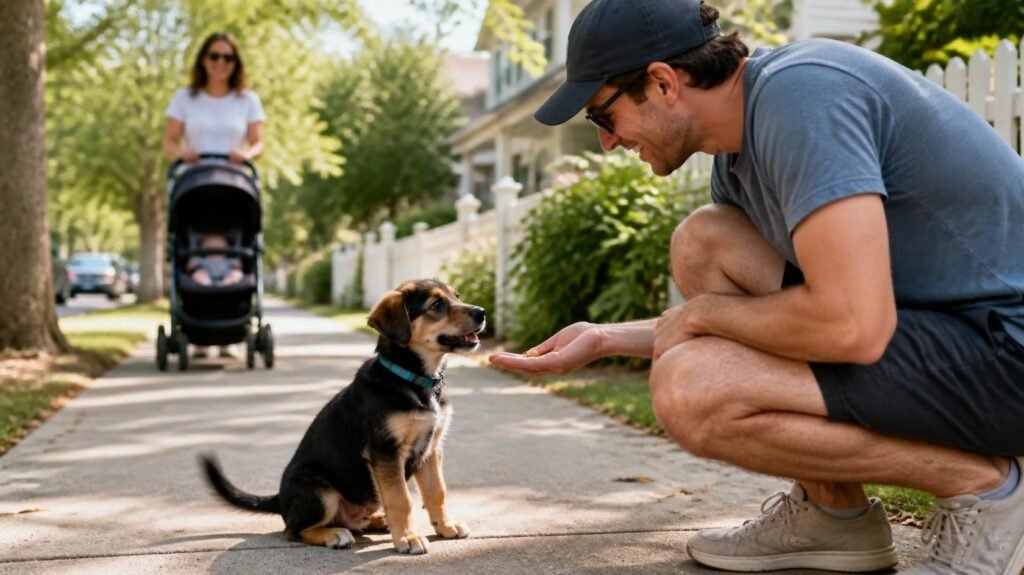
This is a crucial time for socialization. The key socialization window for puppies closes around 14-16 weeks of age. Many people think socialization means playing with tons of other dogs, but it’s really about teaching your puppy that the world is a safe, normal place. This means introducing them to different sounds (the vacuum cleaner, the blender), different surfaces (grass, tile), and different types of people (men with beards, children, people wearing hats) in a controlled and positive way. According to the American Veterinary Society of Animal Behavior, it’s about safe exposure, not maximum exposure—overwhelming them does more harm than good.
Week 3: Bitey Shark Phase and Basic Commands (Days 15–21)
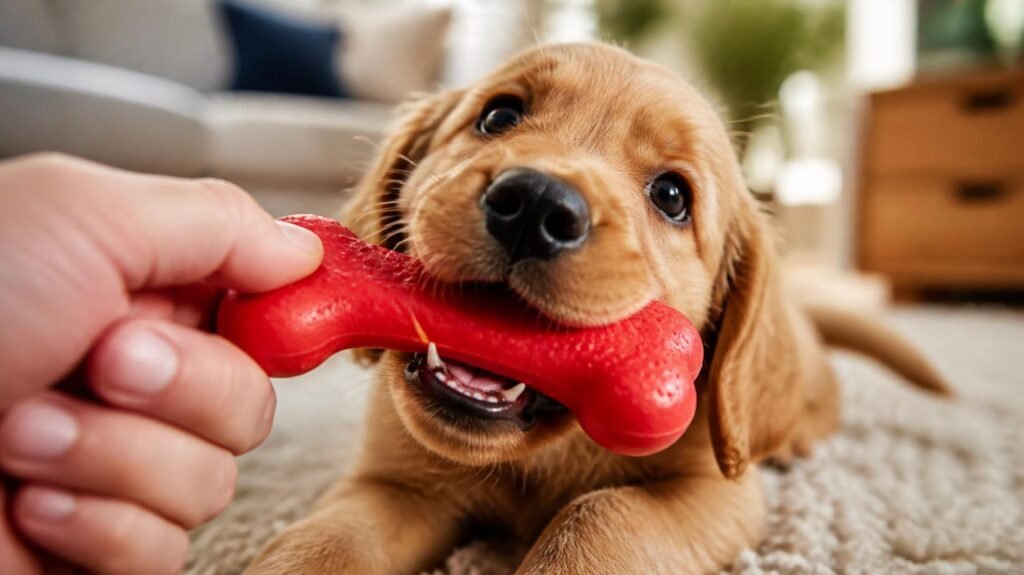
Welcome to the land of needle-sharp teeth. Puppy biting is developmentally normal, especially during teething (typically 12-16 weeks). They explore the world and play with their mouths. Your job is to teach them that human skin is not a chew toy.
How to Handle the Nips
When your puppy bites, the best thing you can do is stop moving. Fast movements make it a game. If they keep biting, simply end playtime. This teaches them a fundamental lesson: “If you bite, the fun stops”. This is called “negative punishment” in behavior science, but really, it’s just teaching consequences. Always have a chew toy nearby to redirect their attention. When they chew the toy instead of your finger, praise them like they just won the lottery.
Introducing Commands
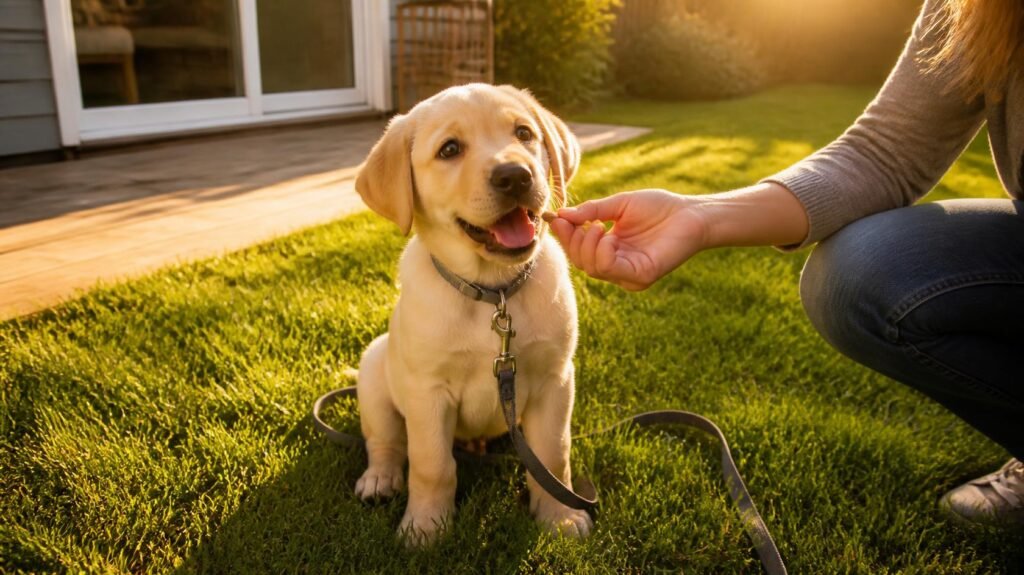
Training sessions should be short—think 5 to 10 minutes. Start with the command “sit.” Holding a treat near their nose and slowly moving it back over their head will usually cause them to sit naturally. Mark the behavior with a word like “Yes!” and reward immediately.
Week 4: Venturing Out and Building Confidence (Days 22–30)
At this point, assuming your vet has cleared it, it’s safe to start exploring the world a little more—still being very careful about exposure to unvaccinated dogs and heavy dog traffic areas.
Leash Manners and Loose-Leash Walking
Start practicing leash walking inside the house first. When your puppy pulls, stop in your tracks. Don’t yank the leash; just be a tree. When they look back at you or the leash loosens, reward them and start walking again. This teaches them that pulling gets them nowhere, but walking nicely by your side gets them moving forward.
Capping Off the First Month
By the end of 30 days, you should have a solid routine for potty breaks, a puppy who is beginning to see their crate as a happy space, and a foundation for basic commands. You should also be seeing a little less of those razor-sharp teeth and a little more of the wonderful dog they’re growing into.
Conclusion: It’s a Marathon, Not a Sprint
The first 30 days are a whirlwind. You’ll have successes, and you’ll have accidents (on the rug). But by following this roadmap, you’re teaching your puppy that you are their trustworthy leader. You’re teaching them the rules of your home. Be patient with them, but also be patient with yourself. It takes about two to three weeks of consistent observation and management to get house training down, and full bladder control often isn’t achieved until 4-6 months.
Your dog’s lifelong habits are being shaped right now. Stick with it, keep it positive, and you’ll be setting the stage for a beautiful, shared life together. Now go give that good boy or girl a treat from us!
FAQ: Your 30-Day Puppy Training Questions Answered
When should I start training my puppy?
You should start training the moment you bring your puppy home, typically around 8 weeks old. At this age, they are sponges for new information and are forming associations between actions and outcomes . Keep training sessions short (5-10 minutes) and always end on a positive note to maintain their enthusiasm.
How long does it take to potty train a puppy?
With consistent effort, many puppies show significant progress in house training within 2 to 3 weeks . However, it’s important to note that reliable bladder control often isn’t fully developed until 4 to 6 months of age . Patience and a strict routine are your best tools.
How do I get my puppy to stop biting?
Puppy biting is normal, but you can manage it by redirecting them to chew toys and ending playtime when they nip. Since they are teething around 12-16 weeks, offering soothing chew toys can help . Avoid fast movements or loud reactions, as these can excite your puppy and make them bite more .
Can I socialize my puppy before they are fully vaccinated?
Yes, but it must be done safely. The critical socialization window closes around 14-16 weeks, so you can’t wait for full vaccination to start. The American Veterinary Society of Animal Behavior recommends safe exposure before the vaccine series is complete. This includes carrying your puppy, using a stroller, or having controlled meet-ups with fully vaccinated, healthy dogs in clean environments . Always consult your vet about the specific risks in your area.