
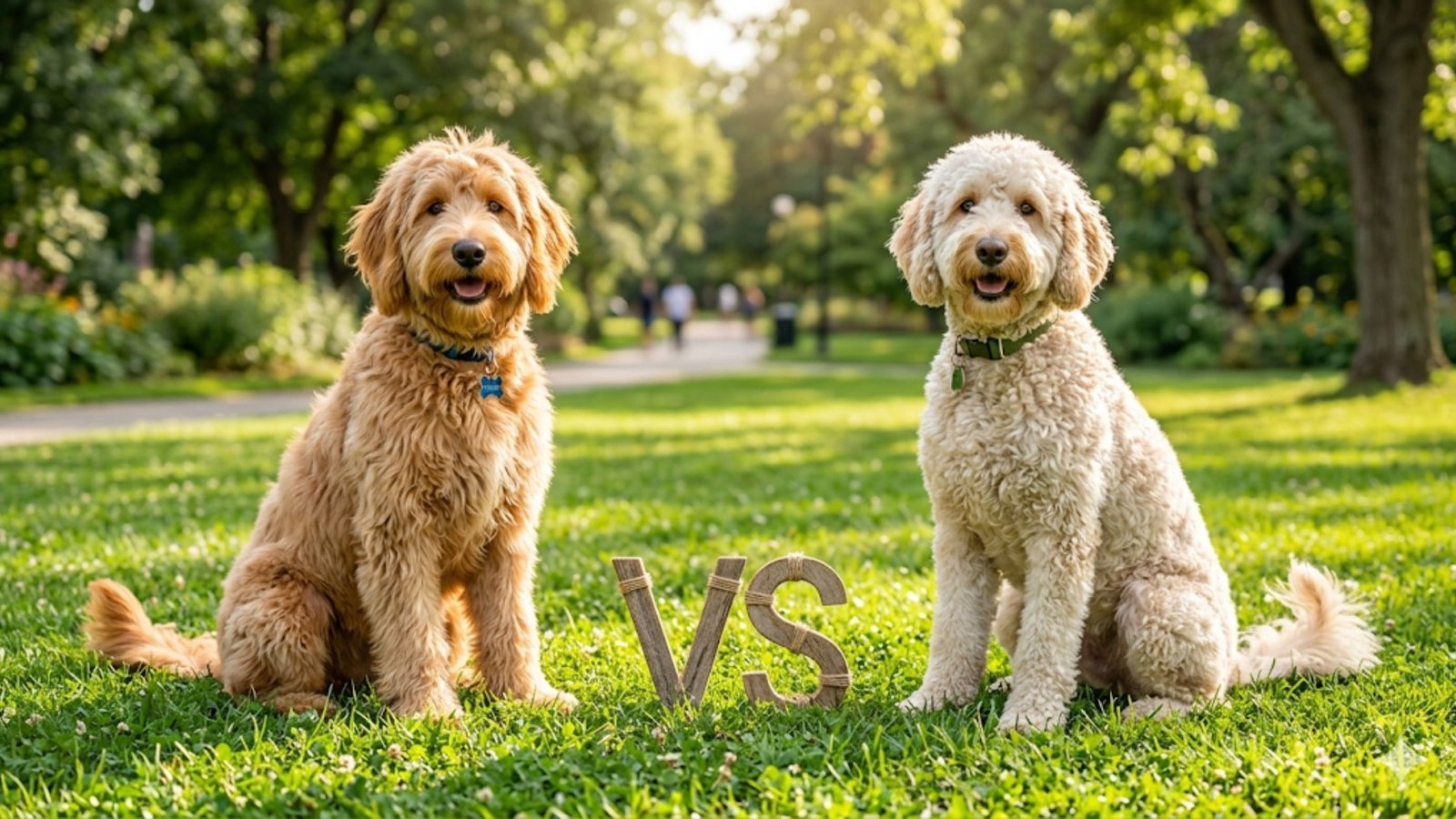
Let me tell you about a client who came to me last year. Sarah had spent three months researching doodles. She’d watched dozens of YouTube videos, read countless blogs, and even visited two breeders. But when she sat in my training room with her new 10-week-old Goldendoodle, Charlie, she looked exhausted and confused.
“I thought I picked the calmer one,” she said. “But Charlie bounces off the walls. My neighbor has a Labradoodle who’s so chill. Did I make a mistake?”
I’ve heard this so many times over my eight years as a dog trainer and pet content strategist. The goldendoodle vs labradoodle differences aren’t just about coat color or size. They’re about energy levels, grooming needs, trainability, and even health quirks. And honestly? Most online guides get it wrong because they focus on looks, not real life.
That’s where I come in.
I’ve worked with over 200 doodles—both Goldendoodles and Labradoodles. I’ve seen the zoomies, the separation anxiety, the puppy biting, and the glorious moments of calm. In this guide, I’ll walk you through exactly what to expect from each breed. No fluff. Just real stories, practical solutions, and a clear answer to one question: Which doodle is right for you?
Let’s dig in.
Why the Goldendoodle vs Labradoodle Debate Even Exists
If you’ve spent any time in dog parks or puppy playgroups, you’ve probably heard the doodle debate. Some swear by Goldendoodles. Others say Labradoodles are smarter, calmer, or healthier.
Here’s the truth: both breeds were originally created for the same reason—hypoallergenic service dogs. But they’ve evolved differently.
A Quick History (Because It Matters)
The Labradoodle came first. Back in the 1980s, a man named Wally Conron bred the first one for a blind woman whose husband was allergic to dogs. He crossed a Labrador Retriever with a Poodle. Smart move, right?
Goldendoodles came a bit later, in the 1990s, as more families wanted that same low-shedding coat but with the Golden Retriever’s famously sweet temperament.
I’ve trained both, and I can tell you—those original goals still show up in their personalities today.
Personal anecdote: My own first doodle client was a Labradoodle named Luna. She was sharp as a tack but stubborn as a mule. A few years later, I worked with a Goldendoodle named Teddy. He wasn’t as quick to learn tricks, but he’d melt into anyone’s lap within seconds. Same doodle heritage. Totally different souls.
Physical Differences You’ll Notice Right Away
Let’s start with what you can see. Because when you bring a puppy home, size and coat matter more than you think.
Size and Build
| Height (standard) | 20–24 inches | 21–24 inches |
| Weight (standard) | 50–90 lbs | 50–65 lbs |
| Body type | Stockier, broader chest | Leaner, more athletic |
Here’s something most articles won’t tell you: Labradoodles often look more “leggy.” Their Labrador and Poodle mix gives them longer legs and a more square build. Goldendoodles? They tend to be a bit chunkier, with a softer, rounder face.
Real-life example: Last month, I had two doodles in my group class—a Goldendoodle named Mochi and a Labradoodle named Ziggy. Same age (8 months), similar weight (55 lbs). But Mochi looked like a teddy bear, while Ziggy looked like a graceful athlete. Their owners were shocked when I pointed out they weighed almost the same.
Coat Types and Shedding
This is the #1 question I get: “Which one sheds less?”
Honestly? Both can shed. Both can be almost hypoallergenic. It depends on the generation (F1, F1B, etc.).
- F1 Goldendoodle (50% Golden, 50% Poodle): Moderate shedding possible.
- F1B Goldendoodle (75% Poodle): Very low shedding.
- F1 Labradoodle: Same deal. Higher Poodle percentage = less shedding.
But here’s a pro tip from someone who’s groomed hundreds of doodles: Labradoodles often have a coarser, wiry coat. Goldendoodles usually have a softer, fleece-like coat. That soft coat mats faster. If you hate brushing daily, a Labradoodle’s wiry coat might save you.
Common mistake: Don’t assume a doodle is “no maintenance” because they don’t shed much. I’ve seen so many owners bring in severely matted dogs. Both breeds need brushing every 2–3 days and professional grooming every 6–8 weeks.
Temperament and Personality – The Real Goldendoodle vs Labradoodle Differences
This is where the magic happens. You can manage a coat. You can’t change a personality.
Goldendoodle Personality: The Velcro Dog
Goldendoodles are lovers. I mean, obsessed with you lovers. They’ll follow you from the kitchen to the bathroom to the bedroom. They crave human connection more than food sometimes.
- Extremely affectionate
- More likely to have separation anxiety
- Often goofy and clownish
- Great with kids and strangers
Story time: A client of mine, Jen, has a Goldendoodle named Waffles. Waffles once sat outside the bathroom door crying for 20 minutes because Jen was taking a shower. That’s the Goldendoodle way. They’re not independent. They want to be part of your soul.
Labradoodle Personality: The Sharp Thinker
Labradoodles are often more independent. Still loving, but they’ll entertain themselves. They’re usually quicker to learn commands but also quicker to test boundaries.
- Smarter in a “problem-solving” way
- Can be aloof with strangers
- Higher prey drive (squirrels, beware)
- More likely to outsmart you in training
I’ve seen Labradoodles figure out how to open baby gates. I’ve seen Goldendoodles get stuck under coffee tables. Both are smart, but Labradoodles have that Labrador stubbornness mixed with Poodle cleverness.
Bulleted comparison from my training notes:
Goldendoodle tend to:
- Cry when you leave the room
- Greet strangers like long-lost friends
- Learn slowly but remember forever
- Snuggle for hours
Labradoodle tend to:
- Watch you leave without a whimper
- Size up strangers before approaching
- Learn fast but get bored easily
- Snuggle on their terms
Energy Levels and Exercise Needs – Be Honest With Yourself
I’ve seen too many people pick a doodle based on looks, then struggle because they can’t meet their exercise needs. Let me save you from that mistake.
Goldendoodle Energy: Moderate with Bursts of Crazy
Most Goldendoodles need 45–60 minutes of exercise daily. But here’s the catch—they don’t need intense running. They’re happy with a long walk, some fetch, and then couch time.
That said, their “bursts of crazy” are real. I call it the “Golden Zoomies.” Around 7 PM, they might race around your living room for 10 minutes. Then collapse.
Labradoodle Energy: Higher and More Demanding
Labradoodles often need 60–90 minutes of solid activity. And not just walks. They need mental challenges. Puzzle toys. Training sessions. Swimming if possible.
Real scenario: A couple came to me with their 1-year-old Labradoodle, Kona. They were exhausted. “We walk her 2 hours a day and she’s still hyper,” they said. I watched Kona for 10 minutes. She wasn’t tired physically—she was bored mentally. We added 15 minutes of nose work and trick training. Problem solved.
Labradoodles get destructive when bored. Goldendoodles get anxious when lonely. Know the difference.
Quick checklist for yourself:
- Do you work from home? → Goldendoodle might suit you better.
- Are you gone 9+ hours daily? → Neither, honestly. But Labradoodle handles alone time slightly better.
- Do you want a jogging buddy? → Labradoodle.
- Do you want a Netflix cuddle buddy? → Goldendoodle.
Trainability – Who’s Easier to Train?
I’ve trained dogs for a living. Let me be real with you.
Goldendoodles: Eager to Please but Slower Learners
Goldendoodles want you to be happy. That’s 80% of training right there. They’re forgiving when you make mistakes. They don’t hold grudges.
But they’re not the fastest learners. I’ve taught “sit” to Goldendoodles in 5–10 repetitions. Labradoodles? Often 2–3 repetitions.
Training tip: Use high-value treats (chicken, cheese) with Goldendoodles. They’re food-motivated but not obsessive. Keep sessions short—5 minutes max. Their attention wanders.
Labradoodles: Fast Learners but Stubborn Streak
Labradoodles will learn “down” in 2 tries. Then they’ll decide if they feel like doing it. That’s the Poodle independence talking.
I once worked with a Labradoodle named Pepper who learned “roll over” in one session. The next day, she looked at me, yawned, and walked away. Not defiance. Just… “I already proved I can do it. Now what?”
Common mistake: Owners think a smart dog is easy to train. Nope. Smart dogs get bored faster. You need variety. New tricks. Different locations. Labradoodles need a trainer who stays one step ahead.
Step-by-step training difference:
For a Goldendoodle:
- Show treat.
- Guide them into position.
- Praise heavily.
- Repeat 8–10 times.
- They’ve got it forever.
For a Labradoodle:
- Show treat.
- They figure it out in 2 tries.
- They do it perfectly 3 times.
- Then they offer random behaviors to see what else gets treats.
- You need to keep raising the bar.
Health Issues – What I’ve Seen in 8+ Years
Both breeds are generally healthy, but they inherit risks from their parent breeds.
Goldendoodle Health Watch
- Hip dysplasia (common in Goldens)
- Ear infections (those floppy, soft ears hold moisture)
- Allergies (skin and food)
- Bloat (deep chest = risk)
My experience: I’ve seen more ear infections in Goldendoodles than any other mixed breed. Clean their ears weekly. Seriously.
Labradoodle Health Watch
- Hip and elbow dysplasia
- Eye problems (PRA – progressive retinal atrophy)
- Addison’s disease (more common than in Goldendoodles)
- Ear infections (but slightly less than Goldendoodles)
What breeder health tests should show (for both breeds):
- OFA or PennHIP for hips
- Eye clearance by a vet ophthalmologist
- Patella evaluation
- Poodle health tests (Von Willebrand’s, etc.)
Real talk: I’ve seen Goldendoodles live to 15 and Labradoodles to 14. But I’ve also seen both get cancer around age 10. Don’t skip regular vet checkups. Don’t skip pet insurance. My honest advice? Budget $50–75/month for insurance from puppyhood.
Grooming Needs – The Honest Truth
I’m not sugarcoating this. Both need serious grooming.
Goldendoodle Grooming
- Brush 4–5 times per week (daily if long coat)
- Professional groom every 6–8 weeks ($80–120)
- Prone to matting behind ears, armpits, tail
Labradoodle Grooming
- Brush 2–3 times per week (if wiry coat)
- Professional groom every 8–10 weeks
- Less matting but more shedding if F1
Tip from my groomer friends: Ask for a “teddy bear cut” on a Goldendoodle and a “puppy cut” on a Labradoodle. Both look adorable and are easier to maintain.
Which Doodle Is Better with Kids and Other Pets?
I’ve placed doodles in families for years. Here’s what works.
Goldendoodle with kids: 10/10. They’re patient, gentle, and forgiving when a toddler pulls their tail.
Labradoodle with kids: 8/10. Good, but they can get overstimulated by loud chaos.
Goldendoodle with cats: Usually great. Low prey drive.
Labradoodle with cats: 50/50. That Labrador retriever instinct to chase can kick in.
Real example: A family with two young kids and a senior cat adopted a Goldendoodle. Perfect fit. Another family with no other pets but an active lifestyle adopted a Labradoodle. Also perfect. Match your home, not just your heart.
FAQ Section
1. Is a Goldendoodle or Labradoodle better for first-time owners?
Goldendoodle, hands down. They’re more forgiving of training mistakes and less likely to outsmart you.
2. Which doodle is more hypoallergenic?
F1B generation of either breed is best (75% Poodle). Between the two, Labradoodle’s wiry coat sheds fewer allergens into the air.
3. Do Goldendoodles or Labradoodles bark more?
Labradoodles tend to alert bark more. Goldendoodles bark when lonely or excited. Neither is a “yappy” breed.
4. Which one lives longer?
Average lifespan: Goldendoodle 10–15 years, Labradoodle 12–14 years. Slight edge to Goldendoodles if well-bred.
5. Can they be left alone for 8 hours?
No. Both can develop separation anxiety. Maximum 4–5 hours for an adult dog. Less for puppies.
6. How much do they cost?
From reputable breeders: $2,500–4,000 for either. Rescue doodles exist but are rare.
7. Which is calmer, a Goldendoodle or Labradoodle?
Goldendoodle is calmer indoors. Labradoodle needs more exercise to reach calm state.
Look, I’ve trained over 200 doodles. I’ve held owners’ hands while they cried over puppy blues. I’ve celebrated when that same puppy finally learned “leave it.” And here’s what I know for sure: there’s no “better” breed. There’s only the right fit for your life.
Choose a Goldendoodle if you want:
- A velcro dog who adores you
- Moderate exercise needs
- A goofy, gentle family companion
- More patience for slower training
Choose a Labradoodle if you want:
- A smart, independent thinker
- A jogging or hiking buddy
- Lower maintenance coat (wiry type)
- A dog who challenges you mentally
Whichever you pick, remember this: every paw has a story. Your story with your doodle is just beginning. Spend time with both breeds if you can. Talk to breeders. Meet adult dogs, not just puppies.
And when you finally bring your doodle home? Drop a comment below or tag me on social. I’d love to hear which one you chose—and what you named them.
Here’s to muddy paws, happy tails, and the perfect doodle for you. 🐾
P.S. If you found this helpful, subscribe to my newsletter for more real-talk dog training guides. No fluff. Just what works.