
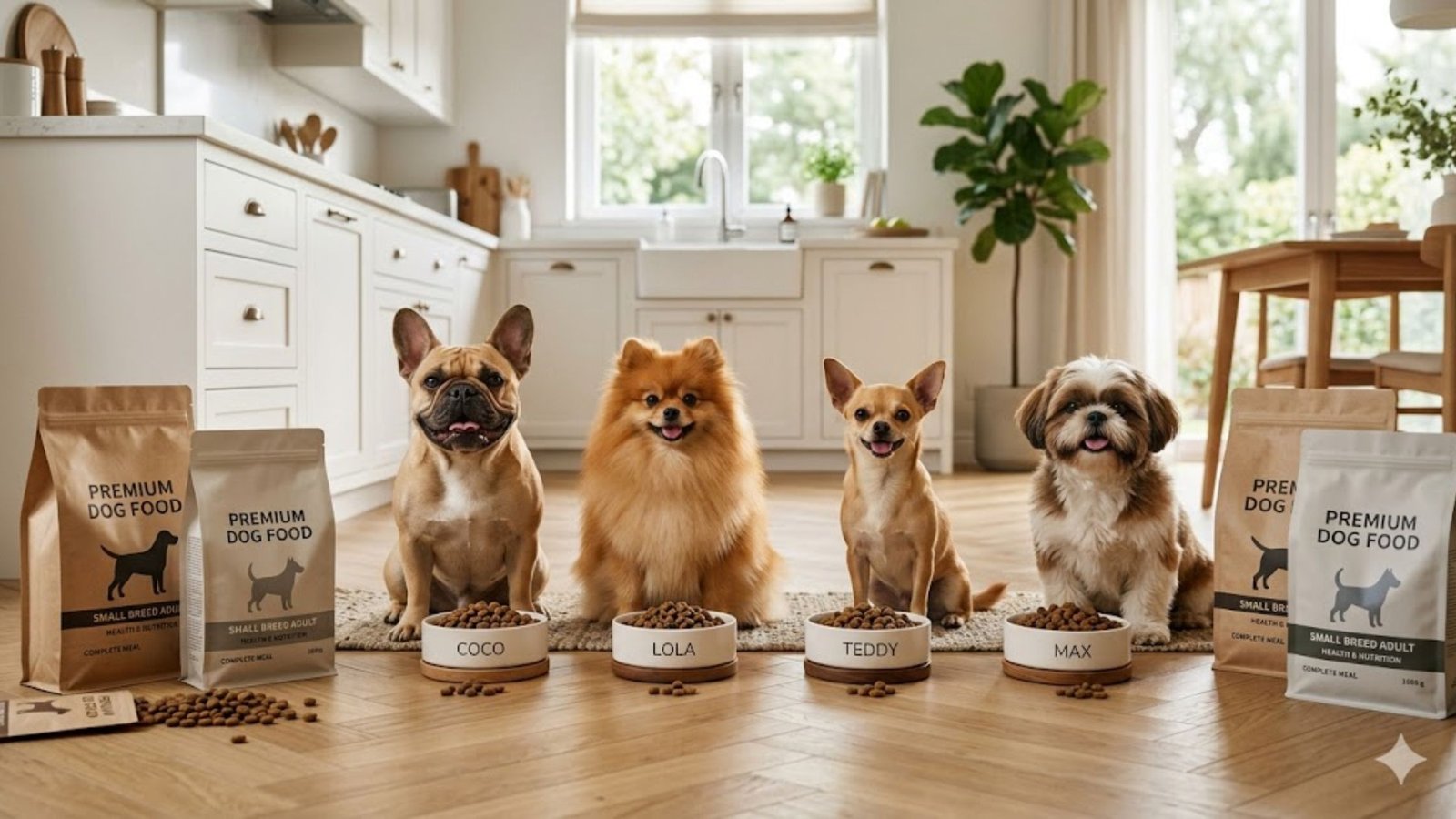
If you have a small dog breed — like a Chihuahua, Yorkshire Terrier, Maltese, Pomeranian, or Shih Tzu — you know full well that they don’t eat the same food as a Labrador. Their small bodies use up energy quickly, their teeth are delicate, and they can often be surprisingly picky. What seemed like the right food five years ago may not be the best option in 2026. So keep reading to learn what really matters in small breed nutrition today, and which foods are winning the trust of owners and veterinarians in the U.S.
Why do small breeds need their own separate food?
This isn’t just a marketing ploy. Small dogs have a faster metabolism, pound-for-pound, than larger dogs. A cup of kibble represents a much larger portion of their daily calories, meaning each bite should be packed with high-quality protein, fat, and nutrients. Their small jaws struggle with large pieces of kibble — many owners have seen their little dog drop a large piece on the floor.
Then there’s dental health. Small breeds are more prone to plaque buildup and tooth decay. The size and texture of the kibble can help clean teeth, or it can exacerbate the problem if it’s too soft or too big.
Joint health is another quiet concern. Patellar luxation (loose knees) is common in small dogs. A food with glucosamine and omega-3s isn’t just for older Labradors anymore — it makes just as much sense for a three-pound Yorkie.
What to Look for on the Bag (Avoid Marketing Traps)
Ignore words like “premium” and “gourmet.” Instead, focus on these five real points:
Crude protein – Dry food should be at least 28%. Small dogs thrive on foods that have animal-based protein (chicken, fish, beef) as the first ingredient.
Fat content – Around 15–20% is ideal. Small dogs need fat for energy, but too much fat in a low-activity dog can cause pancreatic problems.
Kibble size and shape – Look for small, flat or triangular pieces. Round kibble is difficult for dogs with small jaws to crack.
First five ingredients – Meat or fish should be #1, followed by vegetables, healthy grains (like oats, rice) or legumes, and then fats or supplements. Avoid vague terms like “meat meal” or “poultry by-products.”
AAECO Statement – Make sure the food provides complete and balanced nutrition for your dog’s life stage (growth, maintenance, or all stages).
Top Picks for 2026
(Based on What Owners Are Actually Buying)
I spoke with groomers, veterinary technicians, and small dog owners in Texas, Florida, and the Midwest. Here’s what’s really working right now.
- Wellness Core Small Breed – Turkey & Chicken
This brand appears frequently in real customer reviews. Its kibble pieces are small and crunchy, and the first ingredient is turkey. It contains no corn or wheat. Owners of select Pomeranians and Miniature Pinschers say their dogs eat this food consistently. The calorie density is decent – about 420 calories per cup, meaning there’s no fear of overfeeding a five-pound dog. - Nature’s Logic Canine – Chicken Meal Feast
A slightly lesser-known but quickly gaining popularity brand. Its kibble is smaller than a pencil eraser. No artificial vitamins – instead they use natural sources like dried eggs and alfalfa. Great for small dogs with sensitive stomachs. A little pricey, but highly recommended by Maltese owners with skin allergies. - Open Farm Romix Small Breed
If you’re ready for a raw-coated kibble, this is the best option in 2026. It has freeze-dried raw chunks mixed with small kibble. Humanely raised chicken is the first ingredient. Many small dogs, who have turned their noses up at other brands, eat this brand without fail. Just be sure to store it properly – the raw coating means it won’t last in a humid garage. - Royal Canin Small Puppy (for dogs under 10 months old)
Still a favorite brand among veterinarians today for good reason. Its kibble is shaped like a small star – easy enough for even a 10-week-old Chihuahua puppy to chew. It’s not grain-free (which is good – most small dogs don’t need grain-free unless they’re diagnosed with allergies). Owners report better stool quality and less gas compared to other puppy foods. - Merrick Lil’ Plates – Grain-Free Real Chicken & Sweet Potato
A solid option for adult small breeds, especially those that do better without grains. The kibble is small and thin. Many owners of older Yorkshire Terriers who have lost their teeth say this is the only dry food their dogs can still eat. Just watch the calories – especially if your dog is less active.
A great alternative to wet food
Some small dogs refuse dry food, especially as they get older.
Verus’ Paw Lickin’ Chicken Gravy Soft Shreds – This has real chicken shreds, no carrageenan. Small dogs often love it, and it also helps with hydration. Be warned: This isn’t a permanent alternative to kibble (as teeth need some texture), but it’s a great option for a quick change.
2026 Trend Alert
Grain-free foods aren’t as popular as they were five years ago. Most small dogs can easily digest grains like rice and barley. In fact, some grain-free foods use peas and lentils instead of grains, which can be overwhelming for small digestive systems.
Unless your dog has a confirmed grain allergy, don’t pay too much for grain-free. Instead, focus on:
- Protein quality
- Kibble size and texture
- First five ingredients
How to introduce a new food (without the mess)
Young dogs have sensitive stomachs. Don’t just throw out an old bag and put in a new one in one day. Change the food over 7 days as follows:
Days 1–2: 75% old food, 25% new
Days 3–4: 50% old, 50% new
Days 5–6: 25% old, 75% new
Day 7: 100% new
Note:
If diarrhea or vomiting occurs, slow down. Extend each phase by another two to three days.
Final Thoughts from a Longtime Small Dog Owner
I’ve seen many people spend hours researching dog food, only to end up buying a 30-pound bag – which is barely enough for their 6-pound dog to handle.
Always start with a small bag. Most brands offer 4-5 pound options.
Pay attention to your dog’s behavior after feeding:
Does he happily roam the living room, or does he get restless?
Does he scratch his ears less on one food than on another?
The best dog food isn’t the one with the prettiest bag.
It’s the one – the one your little dog happily eats,
the one that’s easy to digest,
and the one that will keep him rolling around the neighborhood for years to come.
In 2026, we have better options than ever before.
But remember: your dog’s own behavior is still the best guide.