
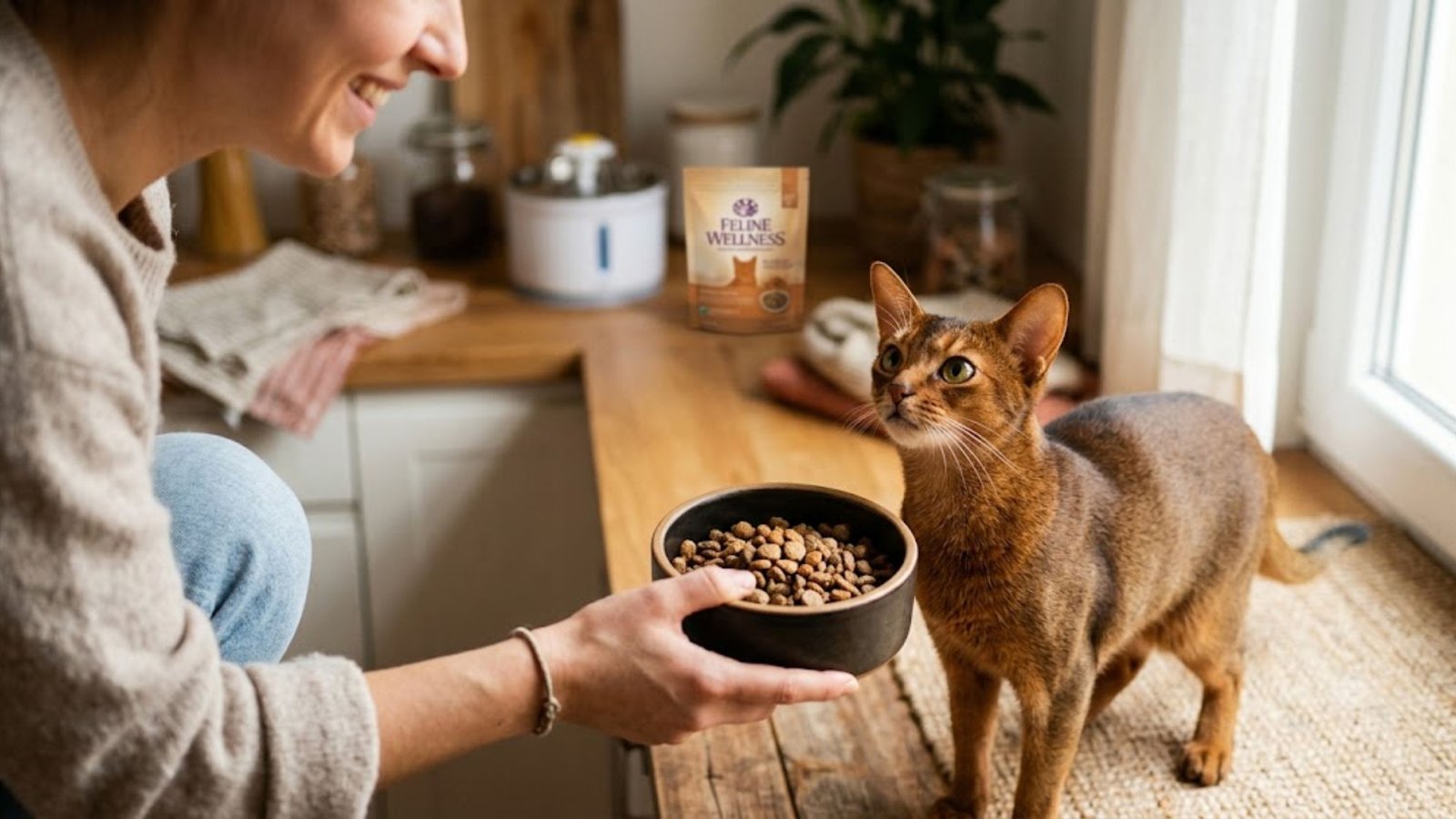
My Abyssinian, Kira, is a real athlete. She climbs heights 10 times a day, pokes her nose in every corner, and comes to sleep next to me at night. But one day, I changed her food — a cheap, grain-based food. Within a week, her energy level dropped, her coat became dull, and she started sleeping more than usual. I realized that food choice is more important for an active cat like an Abyssinian than for a regular cat.
With over 8 years of experience in pet care and content strategy, I’ve seen many cats—including my own Kira—whose health benefits were greatly enhanced by the right food. In this guide, I’ll give you all the information you need to know about choosing the best food for Abyssinian cats. Here you’ll learn: what nutrients Abyssinians need, how to choose between wet and dry food, and what common mistakes to avoid.
Nutritional needs of Abyssinian cats
Abyssinian cats are also known as “Abbys” and are extremely active, playful, and curious by nature. To maintain their natural athletic build, they need a diet that is rich in high-quality protein and can provide energy.
Key nutritional needs
High-quality protein: Abyssinian cats need protein for their lean muscle mass and high energy levels. Ideally, their diet should contain at least 26% protein and 20% fat. Prefer protein from animal sources such as chicken, turkey, or fish.
Taurine: This is an essential amino acid that is important for heart health and vision. Taurine deficiency can lead to heart muscle diseases and eye problems.
Omega-3 and omega-6 fatty acids: These are essential for a healthy coat and skin. They also support joint mobility.
Controlled mineral levels: Choose a food with controlled levels of phosphorus and magnesium to support kidney and urinary health.
Humidity: Abyssinian cats drink less water than other cats, so wet food helps increase humidity, which is beneficial for kidney health.
How to choose Best food for Abyssinian Cat
Choosing the right food requires mastering the art of reading labels. Let’s find out what to look for.
Label Reading Tips
First Ingredient: The first ingredient on a food’s list should be real meat (e.g., “chicken,” “salmon”). Avoid vague terms like “by-products” or “meat meal.”
Avoid Fillers: Fillers like corn, soy, or wheat add bulk to a food without adding any nutritional value. Avoid these ingredients if they are listed at the beginning of the food.
Grain-Free Options: Many experts recommend grain-free formulas, as cats are carnivores and do not need grains.
Wet food vs. dry food
Both types of food have their own benefits. Many experts recommend a balance of the two.
Wet food:
Pros: High moisture content (around 70-80%) supports kidney and urinary health. Typically high in protein and low in carbohydrates.
Cons: Should be used immediately after opening and is generally more expensive than dry food.
Dry food:
Pros: Convenient, lasts longer, and can help clean teeth. Some kibbles are specifically formulated for dental health.
Cons: Can be high in carbohydrates. Low moisture content requires cats to drink plenty of water.
Recommended food for the Abyssinian cat
1. High-Protein Wet Food
A high-protein, meat-based wet food is ideal for active breeds like Abyssinians. Products like Evanger’s Heritage Classic Beef It Up Dinner for Cats are specifically formulated for active breeds like Abyssinians and contain real beef as the first ingredient.
Why choose it? This food is packed with protein, which supports muscle health and provides energy for an active lifestyle. It’s also grain-free, which many Abyssinian owners prefer.
2. Novel Protein Sources
Some Abyssinian cats may be allergic to common proteins like chicken. Foods containing novel proteins (such as rabbit or quail) like Evanger’s Super Premium Rabbit and Quail Dinner are great for such cats. This food is also rich in taurine and good for hydration.
Why choose it? If your cat is sensitive to chicken-based foods, this type of food is a great option. The high protein and moisture content are beneficial for the health of the Abyssinian.
3. Monoprotein Options
If you are looking for food allergies or want simple ingredients, a monoprotein food like 3coty CHICKEN (with Hearts) is a great choice. This food is 99.9% chicken and has no fillers.
Why choose it? It is simple, natural and full of nutrients. It is especially suitable for elimination diets. Abyssinian cats love the taste of such natural meat-based food.
Food and mealtimes for Abyssinian cats
As important as the quality of food is, so is its quantity and mealtimes.
Meal Frequency
Children (0-12 months): 3-4 small meals a day to support rapid growth.
Adults (1-7 years): 2-3 meals a day. About 180-220 calories per day to maintain energy levels.
Seniors (7+ years): Low calories but high-quality protein to maintain muscle.
Portioning Tips
Feed by measure: Avoid free-feeding (always leaving food out). Abyssinian cats love to eat, but excess weight can lead to health problems.
Monthly weight monitoring: Gradually adjust the ratio if weight increases or decreases.
Wet and dry balance: Offer wet food for moisture and dry kibble for dental health.
Avoid Common Feeding Mistakes
Even experienced owners make mistakes sometimes. Here are some common mistakes to avoid.
1. Overfeeding
Abyssinian cats love to eat, but excess weight puts stress on their joints and can shorten their lifespan. Always follow the recommended portion sizes and limit treats.
2. Table scraps
Onions, garlic, chocolate, and dairy products can be toxic to cats. Instead, offer vet-approved treats or a little boiled chicken.
3. Insufficient humidity
Cats naturally drink less water, so dehydration is a real problem. Wet food or a water fountain encourages more water intake.
4. Sudden food changes
When changing food, make the change gradually over 7-10 days. Sudden changes can cause digestive problems.
FAQ: Frequently Asked Questions
- What food is best for Abyssinian cats?
The best food for Abyssinian cats is one that contains high-quality animal protein (such as chicken, turkey, or fish), which is rich in taurine and omega fatty acids. Grain-free options and wet food are recommended for moisture. - Do Abyssinian cats need a special diet?
Yes, Abyssinian cats are extremely active, so they need a high-protein diet. They benefit from a balance of kibble for dental health and wet food for kidney health. Like all cats, they are carnivores and need a meat-based diet. - Should Abyssinian cats be fed wet or dry food?
A balance of both is recommended. Wet food is helpful for hydration and kidney health, while dry food helps clean teeth. Many experts recommend a combination of both daily. - How many times a day should an Abyssinian cat be fed?
Adult Abyssinian cats should be fed 2-3 times a day. Babies should be fed 3-4 times a day for rapid growth. - Can Abyssinian cats be fed homemade food?
Yes, but with great caution. It is difficult to maintain the right balance of taurine, calcium, and phosphorus in homemade food. It is necessary to seek the help of a dietitian. - What food is suitable for a baby Abyssinian cat?
Abyssinian babies need DHA (for brain and vision), high calorie density, and the right calcium-phosphorus ratio. A premium baby formula is best.
Conclusion: Kira’s story
Today, Kira is back to her old self — full of energy, shiny coat, and happy. I switched his diet to a high-protein, grain-free wet food and started feeding him wet and dry food every day. The difference was obvious.
Choosing the right food for your Abyssinian can seem a little daunting, but with the right information, it’s easy. Remember: focus on high-quality protein, avoid fillers, and include wet food for moisture. Your cat will thank you — maybe not with a snort, but with playful runs and sleeping on your lap.
Do you have an Abyssinian? What food does he like the most? Share in the comments below!