
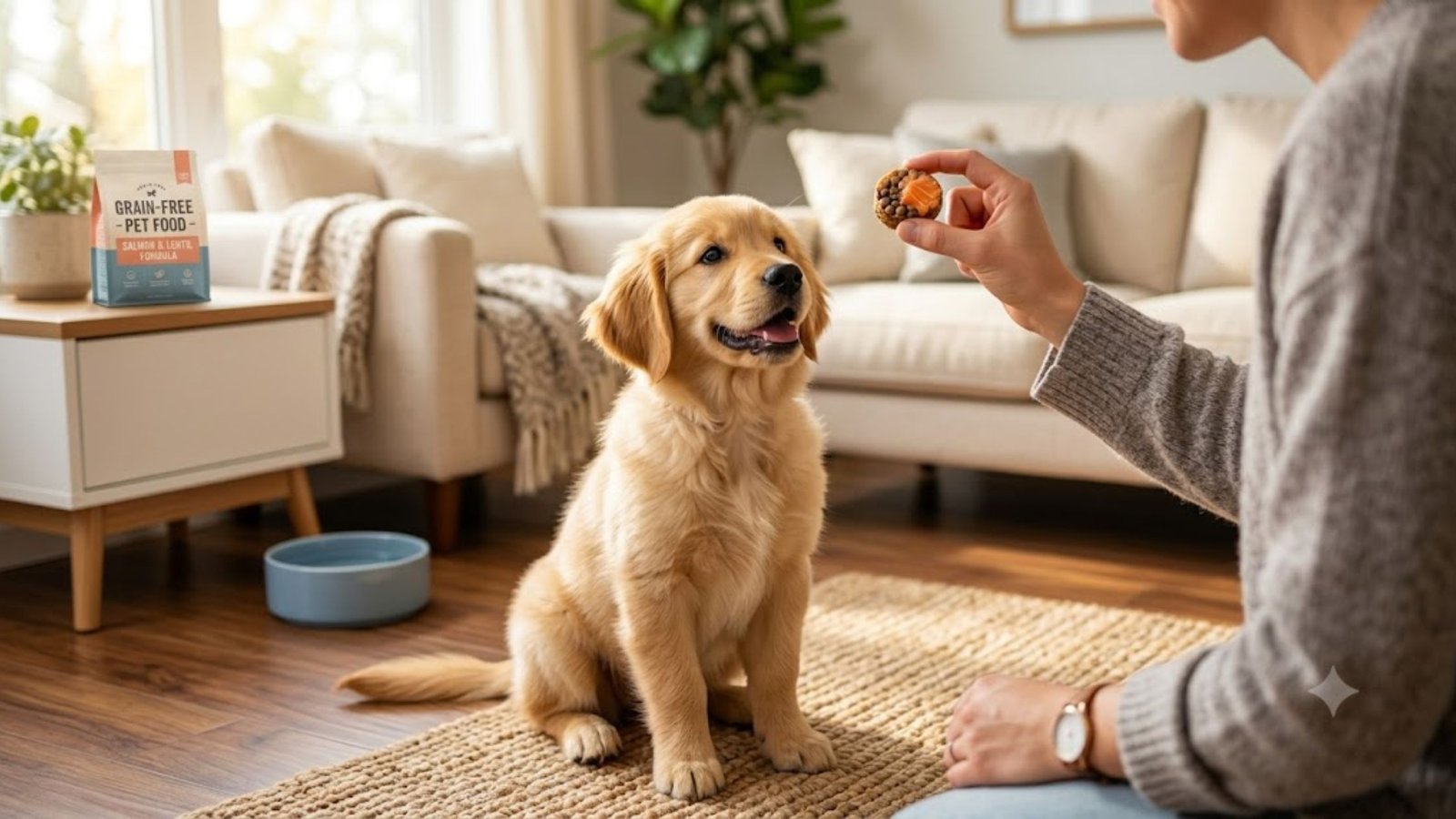
Do you remember that day? When you first brought that little, furry paw into your home. Everything was so exciting – those little eyes, the wagging tail, and that unique smell that only a puppy has. But honestly? A few days later, when you were cleaning the carpet at 3 a.m. or were annoyed by the licked pieces of your expensive shoes, the excitement wore off a bit, didn’t it?
That was the case with me. When I first brought home my two-fingered Golden Retriever puppy, I thought I knew everything. I had read countless blogs, watched videos. But when he started destroying my quiet home, I realized that there was a big difference between theory and practice.
But the good news is that you are not alone. Puppy training is a process, not an event. And with the right guidance, you can turn your little friend into a beautiful, socially acceptable, and happy dog.
In this guide, I’ll walk you through every step of puppy training – from the day you bring your puppy home, to basic commands, potty training, and socialization. I’ll share my own experiences (yes, even the mistakes I’ve made), and give you tips that really work.
Because after all, it’s not just about “teaching commands” – it’s about building a relationship of trust and understanding between you and your dog. And in my experience, that relationship is what really matters.
So let’s get started, shall we?
When to start puppy training?
The biggest question new puppy parents ask: “When should I start training?” The answer is simple: the day you bring your puppy home.
Dogs are capable of absorbing information from a very young age. When you bring an 8-week-old puppy home, their brain is in a critical stage of development. The period between 8 and 14 weeks is the “key socialization period” – this is when puppies are most receptive to new experiences, people, and animals.
But training doesn’t mean you have to give your puppy 30-minute sessions to sit. Training starts with small, gentle moments – when you handle the puppy, when you call his name, when you feed him. Every interaction is a learning opportunity.
How do I know? I delayed training my puppy because “he’s too young.” My mistake. Within the first week he learned that barking gets him what he wants – and it took me months to break that habit. Don’t make that mistake.
Preparing for Puppy Training: Set Up the House for Success
It is very important to prepare the house before the puppy arrives. Just as you make the house safe for a child, you need to do the same for the puppy.
Puppy-proofing
Puppies are curious and will put their noses and mouths into everything. Remove dangerous items:
- Electrical cords
- Poisonous plants
- Small objects that can be swallowed
- Chemicals and cleaning products
Instead, give them safe chew toys and chew toys. Puppies need to chew – especially when teething – so give them appropriate options.
Designated Area
A puppy needs his own space – a crate, a playpen, or a corner where he feels safe. Crate training is very useful because dogs naturally seek out a “den” (a cave-like space) and they don’t usually go potty where they sleep.
Make a routine
Puppies thrive on routine. Regular times for meals, play, potty breaks, and sleep – all of this gives the puppy stability and lets him know what to expect.
My tip: Create a routine chart and stick it on the refrigerator. By making time for it, you’ll save yourself a lot of frustration.
The Basic Rule of Puppy Training: Positive Reinforcement
The most important principle you need to understand: Positive Reinforcement.
This means rewarding the behavior you want with food, play, praise, and affection, and ignoring the unwanted behavior (unless it’s dangerous). Punishment or harsh corrections are usually counterproductive and can damage your relationship with your dog.
Leading organizations, including the American Veterinary Society of Animal Behavior, also recommend this method. Why? It’s effective, humane, and good for your dog’s mental health.
Use “high-value” treats
Treats are very important in training. But not all treats are created equal. High-value treats – such as cheese, freeze-dried liver, or small pieces of hotdog – are more effective at getting a puppy’s attention, especially when there are distractions around.
Remember: Keep treats small (about the size of a pea). You’ll need to reward your puppy often during a training session, and you don’t want your puppy to get full.
Basic Commands: A Step-by-Step Guide
Now for the most important part – commands. This is what will make your puppy a well-behaved, well-behaved dog.
1. Name Recognition
This is the first and most important command. If the puppy does not pay attention to its name, it is difficult to teach the rest of the commands.
How to teach:
- Say the puppy’s name in a happy, soft voice.
- When he looks at you, immediately say “yes” and give a treat.
- Practice this several times a day, in different places.
Tip: Only use your puppy’s name in a positive context. If you use it to scold him, he will develop a negative association with his name.
2. “Sit”
This is usually the first command a puppy learns, and it’s great for impulse control.
How to teach:
- Hold a treat near the puppy’s nose.
- Slowly move the treat over his head and back (towards his tail).
- As his lower body lowers, say “sit.”
- When he sits, immediately say “yes” and give him a treat.
- Practice this in several short sessions a day.
3. “Come” (Come / Recall)
Recall – the puppy coming to you when you call – is the most important command for safety.
How to teach:
- Start in a quiet, enclosed area where there are no distractions.
- Say “Come” in an excited voice, using the puppy’s name.
- When he comes toward you, generously offer treats and praise.
- Gradually increase the distance and add distractions.
Special note: Never punish a puppy by using the “Come” command. It should always be a positive experience, otherwise the puppy will be reluctant to come.
4. “Stay”
This teaches patience and self-control.
How to teach:
- Have your puppy “sit.”
- Raise your hand, palm facing the puppy, and say “stay.”
- Take a step back.
- If he stays still, come back and give him a treat.
- Gradually increase the distance and time.
5. Loose-Leash Walking
This is probably the most challenging skill, as puppies can get very excited when they go outside.
How to teach:
- Get your puppy used to wearing a collar or harness – indoors for a short time at first.
- Attach a light leash and let him pull inside the house to get used to it.
- Start walking holding the leash. When he walks calmly next to you, give him a treat.
- If your puppy pulls on the leash, stop walking. Only start walking again when the leash is loose.
Pro tip: The “tap and turn” technique – When your puppy steps in front of you, give the leash a gentle tug and turn in the opposite direction. This teaches your puppy that his attention should be on you.
Potty Training: Avoid That 3 AM Carpet Cleaning
Let’s talk about the biggest fear – potty training. Yes, it’s challenging. But with the right strategy, it’s doable.
Golden Rule: Take your puppy outside often – especially after waking up, after meals, and after play.
Step-by-step:
- Create a schedule: Feed your puppy at a regular time and take him outside at a regular time.
- Specific Place: Designate a specific spot outside the house for pottying.
- Verbal Cue: When your puppy goes potty, say a word (like “go potty”) so that he associates the action with the word.
- Reward Immediately: Give your puppy a treat and praise immediately after he goes potty.
- Accidents: Don’t punish your puppy if he goes potty indoors. It’s your fault you didn’t take him outside on time. Clean up calmly and move on.
Using a crate: A crate is very helpful in potty training. Dogs don’t usually potty where they sleep, so when you can’t attend to your puppy, put him in the crate.
Remember: A puppy’s bladder is small. An 8-week-old puppy can go potty every 2-3 hours. Be patient!
Socialization: Create a confident puppy
Socialization means introducing your puppy to a variety of people, animals, sounds, and situations. This is especially important between the ages of 8-14 weeks.
Do:
- Meet people of different ages and appearances.
- Play with other healthy, vaccinated dogs.
- Listen to new noises (vacuum cleaner, doorbell, traffic).
- Go to new places (but only after vaccinations are complete).
Don’t:
- Don’t force your puppy into situations that scare them.
- Don’t take him to the dog park until he’s finished his vaccinations and is old enough.
- Don’t introduce too many new things at once – do it gradually.
Read body language: If your puppy is stressed, he’ll give signs like his ears back, his eyes squinting, his nose or lips licking, hissing, or his tail wagging. If this happens, take him back to a quiet place.
Common Problems and Solutions
Nipping and Biting
Puppies explore the world with their mouths, and when teething, they have a strong desire to chew.
Solution:
- When your puppy bites, immediately redirect his attention to a chew toy.
- If he bites your hand or foot, stop playing and ignore him.
- The “loud” technique: When your puppy bites too hard, make a loud noise – like another puppy would – so he knows he’s being too loud.
Special note: Never hit a puppy for biting. That will create fear, not a solution.
Excessive Barking
Remedy:
- Find the cause of the barking.
- Say “Quiet” in a calm voice.
- When he calms down, give him a treat immediately.
- Divert his attention to a toy or command.
Important: Do not yell at a barking puppy – it will only make him more agitated.
Jumping Up
Remedy:
- When the puppy jumps up, turn your back on him – no eye contact, no talking.
- When all four feet are on the ground, give him a treat and praise immediately.
- Get him into the habit of “sit” when guests arrive.
Puppy Training Tips: What I Learned (Sometimes the Hard Way)
Here’s my own list – what I’ve learned from my experiences with my puppies:
- Keep sessions short: A puppy’s attention span is only a few minutes. Several 3-5 minute sessions a day are more effective than a long hour.
- Always end on a positive note: If a session doesn’t go well, take him back to a command he knows (like “sit”) and end it with a reward.
- Be consistent with everyone in the household: If you don’t let your puppy get on the couch, no one in the household should let him. Everyone should use the same commands and rules.
- Don’t train a tired puppy: An 8-week-old puppy needs up to 20 hours of sleep a day. Don’t train a tired or hungry puppy.
- Increase difficulty gradually: Don’t move on to the next level until your puppy is 85% successful at a skill.
- Always supervise: Until you can fully supervise your puppy, keep him in a crate or playpen. This prevents accidents and dangerous situations.
Training Timeline by Age
8-10 Weeks: Foundation Work
- Establishing a Routine
- Teaching Name Recognition
- Starting Potty Training
- Introducing the Crate
- Getting Used to the Leash
- Starting to Teach “Sit”
10-12 weeks: Introduction to the world
- Meeting guests at home
- Introducing new sounds and objects
- Beginning of “come” and “stay”
- Continuing socialization
12-16 weeks: The outside world
- Starting to go outside after vaccinations
- Attend puppy training classes
- Practice walking on a leash
- Give chews during teething
16 weeks+: Advanced skills
- More advanced commands
- Practice in different environments
- Long-distance “come”
- Long-term “stay”
FAQ: Frequently Asked Questions
1. When should puppy training start?
The day you bring your puppy home. An 8-week-old puppy is ready to learn.
2. What is the best way to train a puppy?
Positive reinforcement – rewarding good behavior and ignoring unwanted behavior. This is the most effective and humane method.
3. How long does it take to potty train a puppy?
Every puppy is different, but with consistency, most puppies are potty trained in 4-6 months.
4. What if my puppy doesn’t pay attention to training?
Keep sessions short, minimize distractions, and make sure the puppy is rested and hungry. Use high-value treats.
5. Can I punish my puppy?
No. Punishment is counterproductive, damages the relationship, and creates fear. Instead, reward good behavior and ignore or redirect bad behavior.
6. Should I go to puppy training classes?
Yes! After 12 weeks and vaccinations, puppy training classes are great – they’re a great opportunity for socialization and advanced skills.
7. How much sleep does a puppy need?
An 8-week-old puppy needs up to 20 hours of sleep a day. Keep training sessions short and give him plenty of rest.
The Journey, Not the Destination
Puppy training is a journey – patience, consistency, and a whole lot of love. There will be days when you’re frustrated, when your puppy drives you crazy, when you feel like nothing is working. But there will also be days when your puppy “sits” for the first time, when he walks calmly on a leash, when he wags his tail when he sees you – and you’ll know it was all right.
Remember, every puppy is different. What works for one may not work for another. Watch your puppy, read his cues, and go at his own pace. If you get stuck, don’t hesitate to seek help from a professional trainer or behaviorist.
Most importantly: Enjoy the process. Your puppy will only be little for a short time. Every moment – whether it’s accidents, chewed shoes, or waking up at night – is a memory that you’ll cherish for a lifetime.
And finally, when you’re sitting on the sofa with your old, calm dog, you’ll know that all that hard work was worth it.
Have a good journey! 🐾