
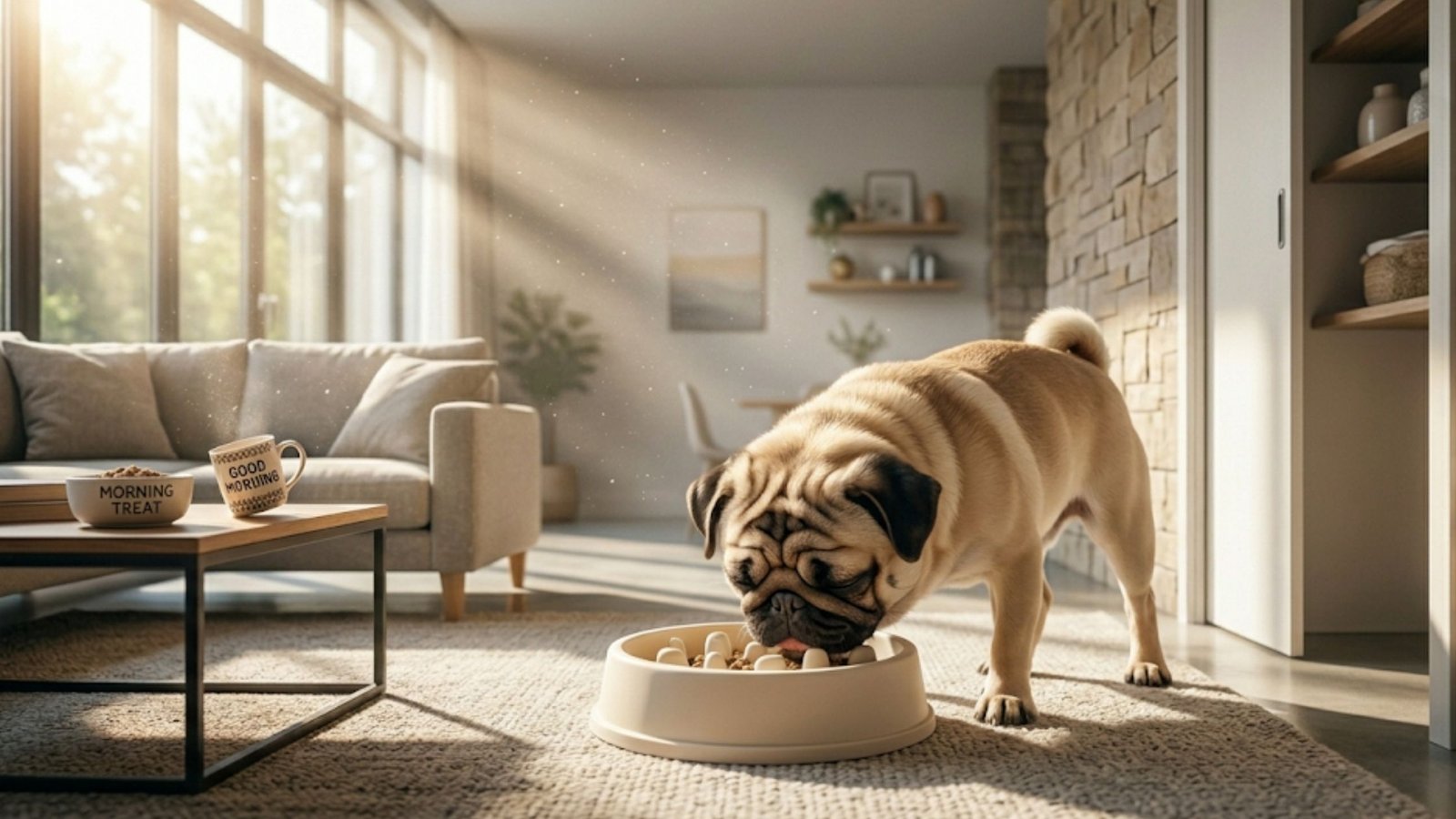
I’ll never forget the first time I watched a French Bulldog eat. It was my friend’s dog, Gizmo. I had just set his dinner bowl down—a standard ceramic dish—and before I could even turn around to grab my coffee, it was over. I’m not kidding. He had inhaled a full cup of kibble in under 30 seconds.
What happened next was the scary part. He started gagging. His little body was heaving, trying to catch its breath while also trying to force down a mountain of unchewed food. We rushed him to the vet that day, and the diagnosis was simple: bloat risk and potential aspiration pneumonia if this continued.
That was the day I realized that for our flat-faced friends, feeding time isn’t just about nutrition—it’s about safety.
If you’re reading this, you probably know the struggle. You have a beautiful Brachycephalic breed (that’s the fancy term for flat-faced dogs like Pugs, Bulldogs, Boxers, and Shih Tzus) who acts like every meal is their last. You’re worried about the choking, the vomiting, or the gas that could clear a room.
In this guide, I’m going to share the five best slow feeder bowls for flat-faced dogs that I’ve personally tested over the last 8 years. We’ll look at what makes a bowl “brachycephalic-friendly,” why a regular slow feeder might still be a struggle for them, and which designs actually work to turn mealtime from a race into a relaxing experience.
Why Flat-Faced Dogs Need a Special Slow Feeder
Before we get into the reviews, we need to talk about the anatomy of your dog’s face. You can’t just grab any slow feeder from the pet store. I made that mistake with my own rescue Bulldog, Winston. I bought a trendy maze bowl, and it was a disaster.
The Anatomy Problem: Smooshed Noses and Deep Creases
Flat-faced dogs have a condition called Brachycephaly. This means their skull bones are shortened, giving them that adorable “smooshed” face. However, this structure changes everything about how they eat:
- Short Snouts: They can’t reach into deep bowls without squishing their noses against the sides.
- Underbites: Many (like Boxers and Bulldogs) have an underbite. If the bowl’s obstacles are too high or sharp, they scrape their chins.
- Breathing: The main concern is breathing. When they gulp food down with air, they are at high risk for Brachycephalic Obstructive Airway Syndrome (BOAS) flare-ups, regurgitation, and the life-threatening condition, Gastric Dilatation-Volvulus (GDV) —commonly known as bloat.
The “Gulp” Danger Zone
When a standard bowl is too deep or a slow feeder has narrow mazes, a flat-faced dog can’t use their tongue properly. They end up using their lower jaw like a shovel, pushing their face into the food. This not only frustrates them but forces them to tilt their heads back to swallow, increasing the risk of choking.
So, what do we look for? The best slow feeder bowl for a flat-faced dog needs to have shallow depth, wide surfaces, and low-rise, gentle obstacles.
Key Features to Look for in a Brachycephalic Slow Feeder
Over the years, I’ve developed a checklist for my clients. When you’re shopping, keep these five things in mind:
- Low Profile: The rim of the bowl should be no higher than 1.5 to 2 inches. Your dog shouldn’t have to “dive” into the bowl.
- Wide Diameter: A wider bowl spreads the food out, so their nose isn’t trapped in a corner.
- Rounded Obstacles: Look for soft, rounded, or curved bumps. Avoid sharp angles or high walls that poke their jowls or underbite.
- Non-Slip Base: A flat-faced dog is a determined eater. If the bowl slides, they’ll push it across the floor, creating stress and mess. Suction cups or heavy rubber bases are essential.
- Material: Stainless steel is the most hygienic (and usually dishwasher safe), but high-quality, BPA-free silicone is often safer for their faces because it’s flexible and soft.
5 Best Slow Feeder Bowls for Flat-Faced Dogs
I’ve tested dozens of bowls with foster dogs, clients’ pets, and my own stubborn crew. Here are the five that actually work for pugs, bulldogs, and other flat-faced breeds.
1. The Overall Winner: The Neater Feeder (Express Model)
Let’s be honest—when you have a messy eater, the Neater Feeder is a lifesaver. While it’s technically a stand, the Express Model is my top pick for brachycephalic breeds. It’s not a traditional slow feeder, but it solves two major problems: height and splatter.
- Why it’s great for flat-faces: The Express version comes with a specially designed divider that acts as a gentle obstacle. It’s low enough that a Pug can easily reach the food but structured enough to prevent gulping. Plus, the elevated height helps with digestion and reduces neck strain.
- The Mess Factor: It catches the water and food drool in a separate basin. If your Bulldog is a “drool shaker” (you know what I mean), this keeps your floors clean.
- The Verdict: This is my go-to for Frenchies and English Bulldogs. It’s expensive, but it lasts forever.
Pros:
- Reduces neck strain (elevated)
- Catches spills and drool
- Gentle, shallow obstacle design
- Stainless steel bowls are dishwasher safe
Cons:
- Higher price point
- Takes up more counter/floor space
2. Best Silicone Option: The LickiMat (Slow Feeder Mat)
If your dog has a severe underbite or is prone to chin acne (common in flat-faced breeds), you might want to ditch the bowl entirely. Enter the LickiMat.
- Why it’s great for flat-faces: This isn’t a bowl; it’s a flat mat with textured grooves. You spread the wet food, raw food, or even soaked kibble onto the surface. The dog has to lick the food out of the grooves.
- The Health Benefit: Licking is a calming behavior for dogs. It releases endorphins and reduces anxiety. For flat-faced dogs who often have breathing-related anxiety, this turns mealtime into a soothing, slow-paced activity. Zero risk of nose smashing.
- My Experience: I use the LickiMat for my senior Pug who lost a few teeth. He couldn’t use mazes anymore, but this mat lets him eat at his own pace without pain.
Pros:
- 100% flat—no face smashing
- Reduces anxiety through licking
- Great for wet food, yogurt, and pumpkin
- Dishwasher safe (top rack)
Cons:
- Not ideal for dry kibble (unless you soak it)
- Requires a flat surface to place it on
3. Best for Pugs & Small Brachycephalics: The Outward Hound Fun Feeder (S-L-O-W)
Outward Hound is the king of slow feeders, but not all their designs work for flat-faces. You have to pick the right pattern. For Pugs, Boston Terriers, and small Frenchies, the “S-L-O-W” pattern is my top pick.
- Why it’s great for flat-faces: Look for the “Lil’ Paws” or the standard S-L-O-W design. These feature a spiral pattern that is shallow and wide. The obstacles are rounded, so they guide the tongue without scraping the chin.
- What to avoid: Stay away from the “Maze” or “Crazy” patterns. Those have sharp turns and high walls that frustrate flat-faced dogs, causing them to give up or paw at the bowl.
- Real Story: A client of mine had a Pug named Mochi who was regurgitating after every meal. We switched to the Outward Hound S-L-O-W bowl. The difference was immediate. Mochi started taking small, manageable bites. It took her from 20-second meals to 3-minute meals.
Pros:
- Affordable (under $15)
- BPA-free plastic
- Wide variety of patterns
- Non-slip base
Cons:
- Plastic can get scratched over time (hold bacteria)
- Not durable for aggressive chewers who attack the bowl
4. Best for Bulldogs & Larger Brachycephalics: The UPSKY Slow Feeder (Adjustable)
For larger breeds like English Bulldogs or Boxers, you need a bowl that can handle a bigger face and a bigger appetite. The UPSKY Slow Feeder stands out because of its adjustable design.
- Why it’s great for flat-faces: This bowl has a removable silicone “baffle” (the obstacle part). You can adjust it to create three different levels of difficulty. For a Bulldog with a large head, you can start with the easy setting until they get used to navigating around the bumps, then increase the difficulty.
- Stainless Steel: It’s stainless steel, which is the gold standard for hygiene. Bulldogs are prone to skin allergies and chin acne, and stainless steel is the best material to prevent bacterial buildup.
- Non-Slip: It has a heavy-duty rubber ring on the bottom. I’ve tested this with a 70lb Bulldog who tries to push everything, and it didn’t budge.
Pros:
- Adjustable difficulty levels
- Hygienic stainless steel
- Excellent non-slip grip
- Perfect depth for larger snouts
Cons:
- The silicone insert can be tricky to clean if you don’t have a dishwasher
- Medium price range
5. Best Travel/Portable: The YUPITE Portable Silicone Slow Feeder
Sometimes, you’re on the go—whether it’s a vet visit, a road trip, or a day at the park. The YUPITE Portable Silicone Slow Feeder is a collapsible bowl that actually includes slow-feeder obstacles.
- Why it’s great for flat-faces: This is a super shallow, collapsible bowl. When it’s open, it’s wide and flat, with soft silicone “fingers” that slow down eating. Since it’s silicone, if your dog accidentally bumps their nose, it doesn’t hurt.
- Portability: It collapses flat, so you can keep it in your bag. It’s a lifesaver for preventing your dog from gulping down treats or meals in stressful environments (like the vet’s waiting room) where they are already anxious.
Pros:
- Collapsible and travel-friendly
- Soft silicone is gentle on faces
- Dishwasher safe
- Bright colors
Cons:
- Too flexible for aggressive eaters (they might try to fold it)
- Not as durable for daily use as rigid bowls
Common Mistakes Owners Make (And How to Fix Them)
I see the same mistakes all the time in my inbox. You’re trying to help your dog, but you might accidentally be making it harder.
Mistake #1: Filling the Bowl to the Brim
Just because you have a slow feeder doesn’t mean you should pile it high. The obstacles work best when the kibble is in a single layer at the bottom. If you heap food on top, they can still scoop up mouthfuls. Fix: Split their daily portion into two or three smaller meals.
Mistake #2: Not Considering the Material
I get it—ceramic bowls are cute. But for flat-faced dogs, ceramic is often too heavy to move if it’s in their way, or too high-walled. Fix: Stick to stainless steel for hygiene or silicone for safety.
Mistake #3: Giving Up Too Soon
Some dogs get frustrated by slow feeders at first. They might bark, paw at the bowl, or walk away. This is normal if they are used to gulping. Fix: Start with the easiest slow feeder (like the Neater Feeder or the UPSKY on easy mode) and sprinkle a high-value treat like freeze-dried chicken on top. They’ll learn that “slow” equals “yummy.”
My Go-To Routine for Flat-Faced Mealtimes
After years of trial and error, here is my ritual for feeding brachycephalic dogs. You can use this with any of the bowls above:
- Elevate if possible: For seniors or dogs with severe BOAS, an elevated stand (like the Neater Feeder) is non-negotiable. It aligns their esophagus so gravity helps the food go down.
- Moisten the Kibble: Flat-faced dogs often don’t chew because they can’t. Adding warm water or bone broth to the kibble softens it. If they do happen to gulp, softer food is less likely to cause esophageal damage.
- The 30-Minute Rule: This is the most important rule. No strenuous exercise for 30 minutes before or after eating. A flat-faced dog with a full stomach is at high risk for bloat. No zoomies, no fetch, no walks—just rest and gentle belly rubs.
FAQ
Can flat-faced dogs use any slow-feeder bowl?
No. Many standard slow feeders have high walls and narrow mazes that are designed for dogs with long snouts like Labradors. For flat-faced breeds, the bowl must be wide and shallow with rounded obstacles to prevent chin chafing and frustration.
Are elevated slow feeders better for Bulldogs and Pugs?
Yes, generally. An elevated feeder helps reduce the amount of air a dog swallows by keeping their neck in a more natural alignment. It also reduces strain on their neck and back. However, for dogs prone to bloat (GDV), some vets argue against elevation, so always check with your vet. In my experience, a slight elevation (2-4 inches) is ideal for flat-faces.
How do I clean silicone slow feeders to prevent chin acne?
Chin acne in dogs is often caused by bacteria in the bowl. Silicone is great because it’s soft, but it can hold onto oils. Always wash silicone bowls in hot, soapy water or the dishwasher after every meal. If you notice blackheads or pimples on your dog’s chin, switch to stainless steel for a few weeks to see if it clears up.
My dog eats too fast and vomits. Will a slow feeder solve this?
For most dogs, yes. However, if your dog is regurgitating (the food comes out undigested immediately after eating), it may be a structural issue called megaesophagus, which requires a specialized chair to eat, not just a bowl. If the vomiting persists after switching to a slow feeder, please visit your vet.
Can I use a puzzle toy instead of a slow feeder?
Absolutely! In fact, I encourage it. For flat-faced dogs, snuffle mats or food-dispensing balls can be even better than bowls because they encourage sniffing (which slows breathing) and foraging. Just ensure the toy is large enough that they can’t swallow it and that they aren’t getting frustrated trying to reach the food.
Turning Mealtime into Bonding Time
When I look back at that moment with Gizmo—the gagging, the panic, the rush to the vet—it feels like a lifetime ago. That scary day is what pushed me to specialize in this area. I didn’t want any other pet parent to feel that helplessness.
Switching to the right slow feeder changed everything for the dogs in my life. Winston, my Bulldog, used to be a stressed-out eater. Now, with his Neater Feeder and a splash of bone broth, mealtime is a peaceful ritual. He eats slowly, breathes easily, and actually walks away from his bowl feeling satisfied, not bloated.
Your flat-faced companion relies on you to make the small adjustments that keep them safe. They give us so much love and laughter—it’s only fair we give them the gift of a calm, safe dinner.
If you have a Pug, Frenchie, or Bulldog at home, I’d love to hear about their eating habits. Have you tried a slow feeder before? Drop a comment below and let me know what worked for your pup—your story might just help another worried pet parent find the perfect bowl.
Here’s to happy, healthy bellies and even happier tails.
P.S. Don’t forget to grab the free “Feeding Guide for Flat-Faced Breeds” in my newsletter. It covers portion control, safe foods, and the ultimate 10-step feeding checklist. [Link to sign up]