
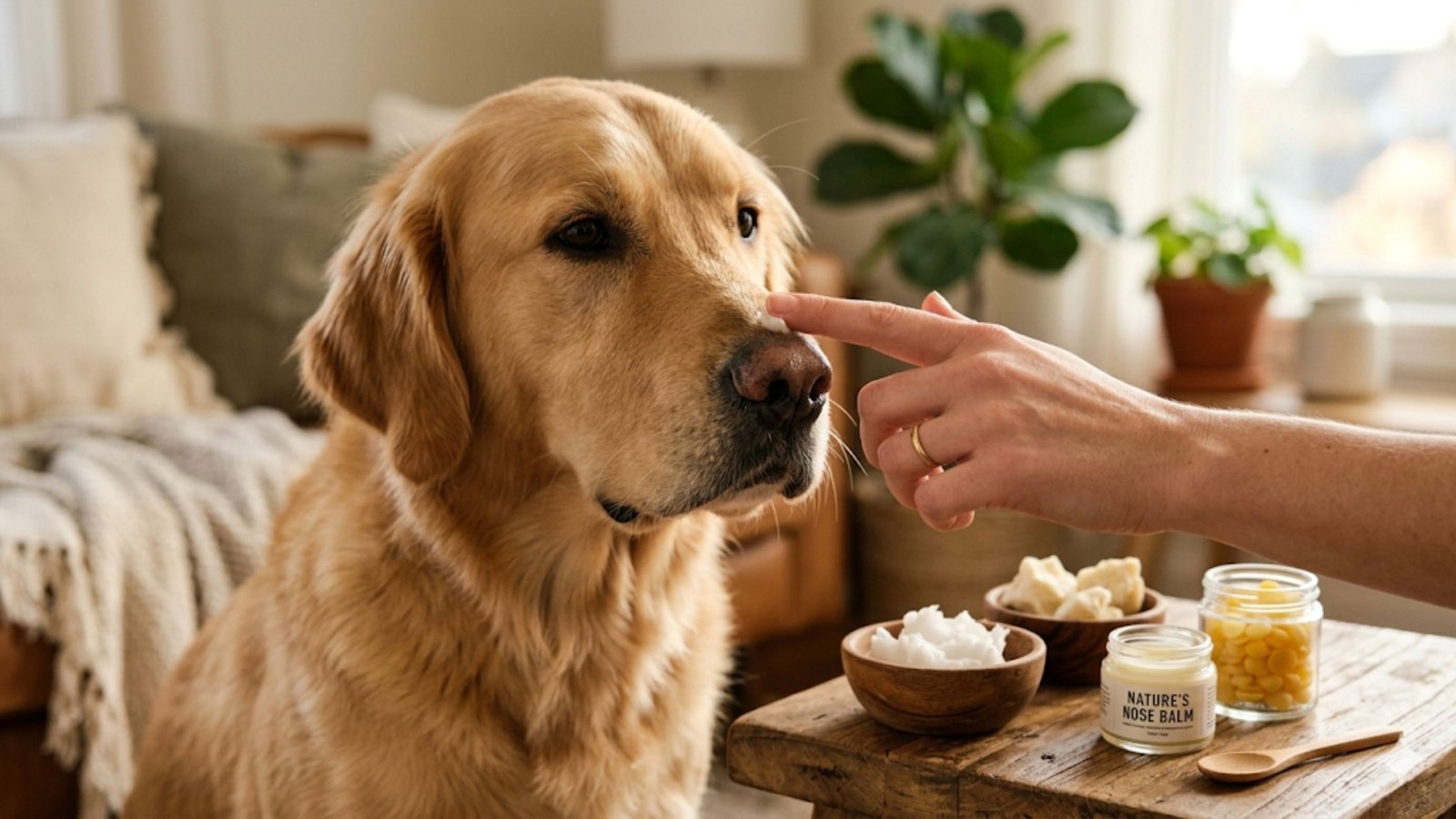
The first time I noticed Finn’s dry nose, I didn’t give it much thought.
It was winter. The heat was blasting in our house. My own lips were chapped. My knuckles were cracking. So when Finn’s usually wet, cold nose felt warm and rough, I thought: “Eh, winter. It happens.”
But then it got worse.
The rough texture turned into cracks. Deep, little fissures that looked painful. One crack on the top of his nose started bleeding when he bumped it against his water bowl. He stopped wanting to give nose kisses (which, honestly, broke my heart more than anything).
I tried everything. Coconut oil. Vaseline. A fancy “nose balm” from the pet store that cost me $18 and smelled like a candle. Some things helped temporarily. Some things made it worse. And one thing I tried? My vet told me it could have made him really sick.
That’s when I realized: A dry dog nose isn’t just cosmetic. It can be painful. It can be a sign of something deeper. And the things you put on it matter—a lot.
After years of dealing with Finn’s seasonal dry nose (and helping clients with everything from hyperkeratosis to sunburned snouts), I’ve learned what works and what absolutely does not.
Let me save you the trial and error. Here’s how to safely and naturally heal your dog’s dry, cracked nose.
First, Is a Dry Nose Actually a Problem?
Here’s something that surprised me: A dry nose alone is not an emergency.
Dogs’ noses change texture and moisture throughout the day. They can be dry after sleeping (they haven’t been licking their nose), after being in the sun, or in low-humidity environments. A dry nose that’s still smooth and not cracked? Probably fine.
The problem is when dry becomes cracked.
A cracked nose is painful. It’s like having chapped lips that split every time you smile. Those little fissures can bleed, get infected, and make your dog reluctant to eat, drink, or play.
Here’s the difference:
| Normal Dry | Problem Dry |
| Warm and dry but smooth | Rough, crusty, or bumpy texture |
| No cracks or fissures | Visible cracks, sometimes bleeding |
| Dog acts normal | Dog may avoid nose touches, rub nose on furniture |
| Resolves with humidity or hydration | Persists or worsens over time |
So no, you don’t need to panic every time your dog’s nose feels warm. But if you’re seeing cracks, crusting, or changes in texture, it’s time to help.
Common Causes of Dry, Cracked Dog Noses
You can’t fix the problem until you know what’s causing it. Here are the usual suspects.
Cause 1: Environmental (Most Common)
Winter: Low humidity, indoor heating, cold wind outside. Same reason your lips chap.
Summer: Sunburn (yes, dogs get sunburned noses, especially pink-nosed dogs), dehydration, heat exposure.
Indoor air: Air conditioning, fans, forced-air heating all dry out the air—and your dog’s nose.
What to do: Humidity is your friend. Run a humidifier in rooms where your dog spends the most time. Offer extra water. Limit sun exposure during peak hours.
Cause 2: Dehydration
A dehydrated dog’s body pulls moisture from less vital areas—including the nose.
Signs of dehydration:
- Dry, sticky gums (not slippery and wet)
- Sunken eyes
- Lethargy
- Loss of skin elasticity (pull up the skin on the back of the neck—it should snap back quickly)
What to do: Offer fresh water frequently. Add water to your dog’s food. For mild dehydration, ice cubes are great—dogs lick them slowly, getting hydration without gulping.
If your dog is dehydrated and also vomiting, has diarrhea, or won’t drink, see a vet.
Cause 3: Hyperkeratosis (Nasal Keratinosis)
This one looks scary, but it’s usually not an emergency.
What’s happening: Your dog’s body produces too much keratin (the protein that makes up hair and nails). The excess builds up on the nose as hard, dry, crusty growths that look like tiny horns or thick scabs.
Which dogs are at risk:
- Older dogs (most common)
- Brachycephalic breeds (Pugs, Bulldogs, Boxers—they can’t lick their own noses easily)
- Labrador Retrievers, Golden Retrievers (genetic predisposition)
What it looks like: Thick, crusty, almost “spiky” buildup on the top of the nose. The nose may look like it’s covered in dried glue or sand.
What to do: Hyperkeratosis can’t be cured, but it can be managed. Regular softening (with safe balms) and gentle removal of excess buildup (after softening) keeps your dog comfortable.
Cause 4: Allergies
Just like humans get stuffy, itchy noses from allergies, dogs can get dry, cracked noses from allergic reactions.
Common allergens:
- Plastic food bowls (switch to stainless steel or ceramic)
- Pollen (seasonal)
- Dust mites
- Cleaning products (sprays, floor cleaners)
- Certain foods (beef, chicken, dairy are common triggers)
What it looks like: Dry, cracked nose PLUS other symptoms—itchy skin, red eyes, ear infections, paw licking, sneezing.
What to do: Identify and remove the allergen. Switch to a stainless steel bowl. Use fragrance-free cleaning products. If you suspect food allergies, talk to your vet about an elimination diet.
Cause 5: Sunburn (Especially for Pink-Nosed Dogs)
Dogs with pink or light-colored noses have less melanin to protect them from UV rays. They can get sunburned just like fair-skinned humans.
What it looks like: Redness, peeling, cracking. The nose may be warm to the touch. In severe cases, blistering.
What to do: Limit sun exposure during peak hours (10 AM-4 PM). Use pet-safe sunscreen (zinc oxide and PABA-free—both are toxic to dogs). Provide shaded areas outdoors.
Long-term risk: Chronic sun exposure can lead to squamous cell carcinoma (skin cancer) on the nose of light-colored dogs. Prevention matters.
Cause 6: Autoimmune Disease (Rare but Serious)
This is the one that needs a vet. Autoimmune diseases like pemphigus, lupus, or uveodermatologic syndrome can cause crusting, ulceration, and cracking on the nose.
What it looks like: Severe crusting, scabbing, ulceration (open sores), loss of pigment (the nose changes from black to pink). The nose may bleed easily. Other areas (ears, paw pads, face) may also be affected.
What to do: See a vet immediately. These conditions require prescription medication (usually steroids or immunosuppressants). Home remedies will not help and may delay necessary treatment.
Real story: A client’s dog had a crusty, cracked nose for months. She tried every balm on the market. Nothing worked. Finally, a vet diagnosed pemphigus foliaceus, an autoimmune skin disease. With the right medication, the dog’s nose healed completely. But the delay in diagnosis meant unnecessary suffering.
If your dog’s nose doesn’t improve with home care after 1-2 weeks, see a vet.
What NOT to Put on Your Dog’s Nose (Please Read This)
I tried some of these before I knew better. Learn from my mistakes.
Human Lotion or Moisturizer
Human lotions contain fragrances, preservatives, and chemicals that can irritate your dog’s nose or make them sick if licked off. Many contain propylene glycol, which can cause skin reactions in dogs.
Vaseline (Petroleum Jelly)
This one surprised me. Vaseline isn’t toxic, but it’s also not helpful. It sits on top of the skin without absorbing. Your dog will lick it off, ingesting petroleum. And it doesn’t provide any healing ingredients—just a temporary greasy barrier.
Hydrocortisone Cream (Unless Prescribed)
Over-the-counter hydrocortisone cream is for itching, not dryness. It can thin the skin with prolonged use. And if your dog has an undiagnosed infection or autoimmune issue, steroids can make it worse. Only use if your vet says to.
Essential Oils (Tea Tree, Peppermint, Eucalyptus)
Many essential oils are toxic to dogs, especially when licked off the nose. Tea tree oil, even diluted, can cause neurological symptoms. Peppermint and eucalyptus can cause vomiting, drooling, and breathing issues. Just don’t.
Coconut Oil (Alone)
Wait—didn’t I just recommend coconut oil? Let me explain.
Coconut oil is safe but it’s not the best choice for a dry, cracked nose. It’s an occlusive (sits on top) rather than a humectant (draws moisture in). It provides temporary relief but doesn’t heal the underlying dryness. It’s also very lickable, so it won’t stay on long.
Coconut oil is fine in a pinch. But for a truly cracked, painful nose, you want something with more healing ingredients.
Zinc Oxide Sunscreen (Toxic)
Many human sunscreens contain zinc oxide, which is toxic to dogs if ingested. Since your dog will lick their nose, this is dangerous. Look for pet-safe sunscreens or physical barriers (like nose balms with SPF from pet-specific brands).
Aloe Vera (From the Plant)
Aloe vera gel (pure, from the plant) is actually safe and soothing. BUT the green part of the aloe leaf contains saponins and anthraquinones that can cause vomiting and diarrhea if ingested in large amounts. If you use fresh aloe, scrape only the clear gel, not the green rind. Honestly? Easier to buy a pet-safe balm.
Safe Natural Balms That Actually Work
After testing dozens of options (and getting feedback from hundreds of clients), these are the ingredients and products that work best.
The DIY Recipe (Cheapest, Most Control)
If you want to make your own nose balm, here’s the recipe I’ve used successfully.
Ingredients:
- 2 tablespoons shea butter (raw, unrefined)
- 1 tablespoon coconut oil (virgin, cold-pressed)
- 1 tablespoon beeswax pellets (provides protective barrier)
- 1 teaspoon vitamin E oil (healing, preservative)
- Optional: 1 tablespoon jojoba oil (closest to dogs’ natural skin oils)
Instructions:
- Melt shea butter, coconut oil, and beeswax in a double boiler (or a glass bowl over simmering water)
- Stir until combined
- Remove from heat
- Stir in vitamin E oil (and jojoba, if using)
- Pour into a small tin or jar
- Let cool completely before using
How to use: Scoop a tiny amount onto your fingertip. Warm it by rubbing between your fingers. Apply a thin layer to your dog’s nose. Let it absorb for a few minutes before your dog can lick it off (distract with a toy or treat).
Storage: Keeps for 6 months at room temperature, longer in the fridge.
Why These Ingredients Work
| Ingredient | Benefits |
| Shea butter | Deeply moisturizing, anti-inflammatory, absorbs well |
| Coconut oil | Antimicrobial, provides barrier, safe if licked |
| Beeswax | Creates protective barrier without clogging pores, stays on longer |
| Vitamin E | Antioxidant, speeds healing, natural preservative |
| Jojoba oil | Mimics dogs’ natural sebum, non-comedogenic (won’t clog pores) |
Store-Bought Options (If You Don’t Want to DIY)
These are my top recommendations after years of testing.
| Product | Key Ingredients | Best For |
| Natural Dog Company Snout Soother | Shea butter, coconut oil, jojoba oil, vitamin E, rosemary extract | All-around best for cracked, crusty noses |
| Burt’s Bees for Dogs All-Natural Nose Balm | Shea butter, rosemary extract, olive oil | Mild dryness, maintenance |
| Pet Head Nose Butter | Shea butter, coconut oil, jojoba oil, vitamin E | Everyday use, pleasant scent (but not overwhelming) |
| Musher’s Secret | Beeswax, vitamin E (originally for paws, works on noses) | Extreme weather protection (winter or summer) |
Real story: I tried Snout Soother after a client raved about it. Finn’s nose was badly cracked—one fissure kept bleeding. Within 3 days of twice-daily application, the bleeding stopped. Within a week, the cracks were healing. Within two weeks, his nose was smooth again. I’m not sponsored by them. It just works.
Step-by-Step: How to Apply Nose Balm
Your dog probably won’t love this at first. Here’s how to make it tolerable.
Step 1: Clean the Nose First
Wipe your dog’s nose with a warm, damp cloth. This removes dirt and softens crusty buildup. Pat dry.
For hyperkeratosis: After softening with a warm compress (5 minutes), you can gently rub off loose crusts with your fingertip or a soft toothbrush. Never pick or pull—only remove what comes off easily.
Step 2: Warm the Balm
Scoop a tiny amount onto your fingertip. Rub between your fingers to warm and soften it.
Step 3: Apply Thinly
Spread a thin layer over your dog’s nose, focusing on the cracks. Don’t glop it on—thick layers just get licked off.
Step 4: Distract Immediately
Have a toy or treat ready. The moment you apply the balm, engage your dog in something else. This gives the balm a few minutes to absorb before they lick it off.
Step 5: Apply Twice Daily
Morning and evening. Consistency matters more than quantity.
How Long Until Improvement?
| Severity | Timeline |
| Mild dryness | 2-3 days |
| Cracks (no bleeding) | 5-7 days |
| Bleeding cracks | 7-10 days |
| Hyperkeratosis | 2-4 weeks (ongoing maintenance) |
Natural Remedies That Aren’t Balms (But Help)
A balm treats the symptom. These address the underlying causes.
Humidifier
Why it helps: Dry air dries out noses. Adding moisture to the air helps your dog’s nose stay hydrated naturally.
How to use: Run a humidifier in the room where your dog sleeps. Aim for 40-50% humidity.
Hydration Boosters
Why it helps: A hydrated dog has more moisture to spare for their nose.
How to do it:
- Add water to kibble (let it soak for 5 minutes)
- Offer ice cubes as treats
- Use a pet water fountain (many dogs drink more from moving water)
- Feed moisture-rich foods (cucumber slices, watermelon without seeds, canned food)
Omega-3 Fatty Acids
Why it helps: Omega-3s support skin health from the inside out. They reduce inflammation and improve moisture retention.
How to do it: Add wild salmon oil or a high-quality fish oil to your dog’s food. Follow package dosing. Improvement takes 4-6 weeks.
Sun Protection (For Pink Noses)
Why it helps: Prevents sunburn, which causes cracking.
How to do it:
- Pet-safe sunscreen (zinc oxide and PABA-free)
- Physical barriers (nose balms with SPF)
- Limit sun exposure during peak hours (10 AM-4 PM)
- Provide shade outdoors
When to See the Vet (Don’t Wait)
Home remedies are great. But they have limits.
See a vet if:
| Symptom | Why |
| Nose doesn’t improve after 2 weeks of home care | Underlying issue (allergies, autoimmune, infection) |
| Nose is bleeding heavily or won’t stop | Possible clotting disorder or severe cracking |
| Open sores or ulceration (not just cracks) | Autoimmune disease, infection, or cancer |
| Loss of pigment (nose changing from black to pink) | Autoimmune disease (discoid lupus, pemphigus, vitiligo) |
| Dog is lethargic, not eating, or has other symptoms | Systemic illness |
| Nose is swollen or painful to touch | Infection, abscess, or foreign object |
| Thick, crusty buildup is severe (hyperkeratosis) | Needs diagnosis and management plan (may need prescription ointments) |
Real story: A client’s dog had a crusty nose that wouldn’t heal. She tried every balm. After 3 months, she finally saw a vet. The diagnosis: discoid lupus (an autoimmune disease affecting the nose). With prescription steroids and immune-modulating medication, the dog’s nose healed. But the delay meant unnecessary suffering.
Don’t be that owner. If home care isn’t working, get help.
Prevention: Keeping Your Dog’s Nose Healthy
Once you’ve healed the cracks, here’s how to prevent them from coming back.
Daily:
- Fresh water available at all times
- Humidifier in dry climates or winter
- Sun protection for pink-nosed dogs
Weekly:
- Apply nose balm (even if the nose looks fine) during dry seasons.
- Check the nose for early signs of cracking or crusting.
Seasonally:
- Increase balm application during winter (heating) and summer (sun, dehydration).
- Add omega-3s to diet if your dog is prone to dry skin.
Lifelong:
- Keep your dog hydrated.
- Address allergies (food, environmental) with your vet.
- Regular vet checkups (nose health is part of the exam).
FAQ
Can I use Vaseline on my dog’s nose?
You can, but I don’t recommend it. Vaseline (petroleum jelly) is not toxic, but it doesn’t heal—it just creates a greasy barrier. Your dog will lick it off, ingesting petroleum. There are much better options (shea butter, beeswax-based balms) that actually moisturize.
Is coconut oil safe for my dog’s nose?
Yes, coconut oil is safe. But it’s not the best choice for a cracked, painful nose. It’s an occlusive (sits on top) rather than a humectant (draws moisture in). It’s fine in a pinch or for mild dryness, but for healing cracks, use a balm with shea butter and beeswax.
Why is my dog’s nose dry and cracked only in winter?
Low humidity is the culprit. Indoor heating dries out the air. Your own lips chap for the same reason. Run a humidifier in your dog’s favorite rooms, and apply nose balm daily during winter months.
My dog’s nose is crusty and thick. Is that hyperkeratosis?
Probably. Hyperkeratosis causes thick, crusty, almost “spiky” buildup on the nose. It’s common in older dogs and certain breeds. It can’t be cured, but it can be managed with regular softening (warm compresses) and balm application. See your vet for a definitive diagnosis.
Can I use human chapstick on my dog’s nose?
No. Human chapsticks contain fragrances, flavors (peppermint, cherry, etc.), and chemicals that can irritate your dog’s nose or cause stomach upset if licked off. Some contain camphor or phenol, which are toxic to dogs. Stick with pet-specific balms or the DIY recipe above.
My dog’s nose is dry, cracked, and bleeding. What do I do?
Apply a small amount of safe balm (shea butter or Snout Soother) to the cracks. If bleeding is heavy or won’t stop, see a vet. For minor bleeding, the balm will create a barrier that allows healing. If there’s no improvement in 3-5 days, see a vet.
Final Thoughts: Finn’s Nose Today
Finn’s nose isn’t perfect. He’s 10 years old, and his nose gets dry faster than it used to. In the winter, I still see a little roughness if I skip balm for a few days.
But the cracks? Those are gone. The bleeding? Never happens anymore. He gives nose kisses again (thank goodness).
I keep a tin of Snout Soother on the coffee table. Every morning, while I put on my own lip balm, I put a little on his nose. It’s become a ritual. He sits patiently, tongue slightly out, waiting for his turn.
Does he love it? No. He tolerates it. But he also doesn’t have a painful, cracked nose anymore.
That’s the deal we make with our dogs, isn’t it? We do things they don’t always love because we love them. We put balm on cracked noses. We give them pills wrapped in cheese. We carry them up stairs when their hips hurt.
Because they gave us everything. A dry, cracked nose is the least of what we can help with.
Take care of that snout. It’s how they experience the world. Every smell. Every treat. Every gentle nose-touch to your hand.
It deserves to feel good.