
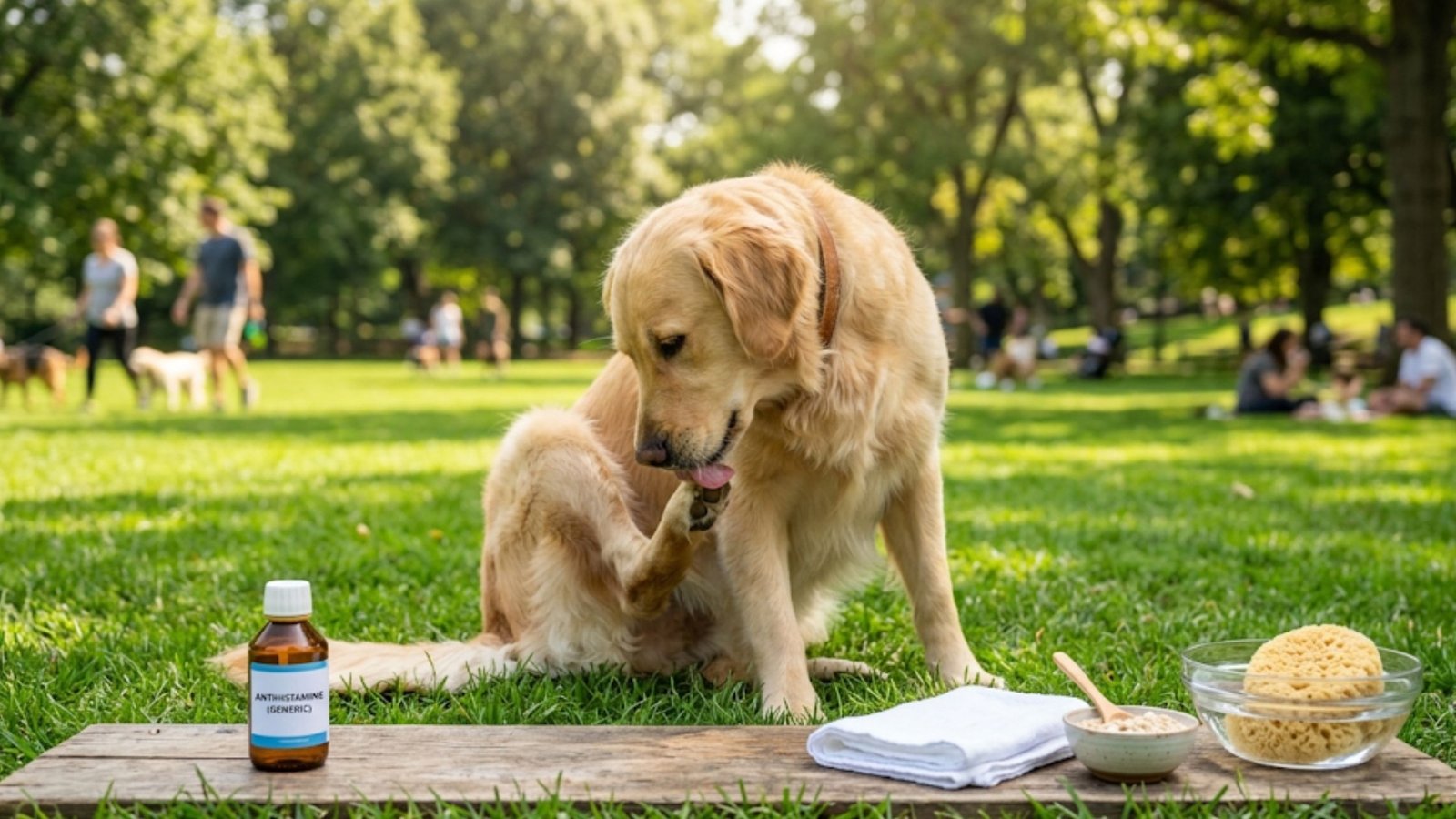
The first summer I noticed Finn’s grass allergy, I thought he had fleas.
He was scratching. Constantly. His belly was pink and irritated. He would come inside from the yard and immediately start licking his paws like they were covered in hot sauce. I checked him for fleas three times. Nothing.
I changed his food. I changed his shampoo. I bought expensive “sensitive skin” dog beds. Nothing worked.
Then my vet asked me a simple question: “Does he seem worse right after he’s been on the grass?”
Lightbulb.
Finn is allergic to grass. Not all grass—just certain types, and only during certain times of the year. But enough to make him miserable every spring and summer.
I spent the next few years trying everything. Antihistamines. Medicated shampoos. Paw wipes. Supplements. Some things worked. Some things didn’t. And some things I tried made him worse.
If your dog is scratching, licking, or rubbing after time outside, you’re probably in the same boat I was. You’re not sure if you should run to the vet for medication or try home remedies first. You’re not even 100% sure it’s grass causing the problem.
Let me walk you through what I learned—the difference between antihistamines and home care, when to use which, and how to keep your grass-allergic dog comfortable without losing your mind.
First, Is It Really Grass?
Before you start any treatment, you need to be sure grass is the actual culprit. Because treating the wrong thing is a waste of time and money.
Grass allergy symptoms in dogs:
| Symptom | What It Looks Like |
| Paw licking/chewing | Constant licking between toes, brown-stained fur from saliva |
| Belly irritation | Red, pink, or bumpy skin on the underside, especially after lying in grass |
| Scratching | Scratching sides, chest, armpits, or ears |
| Face rubbing | Rubbing face on carpet, furniture, or grass itself |
| Ear infections | Recurring ear problems, head shaking, foul smell |
| Biting at rear/tail base | Less common, but can indicate environmental allergies |
Unlike humans who get sneezy, runny noses, and watery eyes from seasonal allergies, dogs typically show allergies through their skin. This is called atopic dermatitis.
How to tell if grass is the trigger:
- Symptoms worsen after time on grass (especially rolling, lying down)
- Symptoms improve when you limit grass exposure (staying on pavement, indoor time)
- Symptoms are seasonal (spring and summer are worst)
- Paws and belly are the most affected areas (direct contact points)
Other things that can look like grass allergies:
- Fleas (check for flea dirt—tiny black specks on the skin)
- Food allergies (usually year-round, not seasonal)
- Contact allergies (cleaning products, laundry detergent, mulch)
- Mites or other parasites
The best way to know for sure: See your vet. They can rule out other causes and, if needed, do allergy testing (intradermal or serum testing) to identify specific triggers.
The Two Approaches: Antihistamines vs. Home Care
You have two main tools for managing grass allergies. They work best together.
| Approach | What It Does | Best For |
| Antihistamines | Blocks histamine release, reducing itching and inflammation | Moderate to severe symptoms, acute flare-ups, when home care isn’t enough |
| Home Care | Reduces exposure, supports skin barrier, soothes irritation | Mild symptoms, maintenance, prevention, reducing need for medication |
The reality: Most dogs with grass allergies need both. Home care reduces the severity, and antihistamines manage breakthrough symptoms. You’re not choosing one or the other—you’re building a toolbox.
Part 1: Antihistamines for Dog Grass Allergies
Antihistamines work by blocking histamine, the chemical your dog’s body releases during an allergic reaction. Less histamine = less itching.
The honest truth from research: Antihistamines don’t work for every dog. One study showed only 18% of dogs had relief from antihistamines. Another study found no response at all to cetirizine (Zyrtec) specifically.
But when they work? They can be a game-changer.
Common Antihistamines for Dogs
Benadryl (Diphenhydramine)
Benadryl is the most common and well-known antihistamine for dogs. It’s available over the counter, but should only be used under veterinary guidance.
- Dosage: 1 mg per pound of body weight, every 8-12 hours
- Example: A 25 lb dog can get a full 25 mg tablet or half of a 50 mg tablet
- Form: Plain tablets only—never liquid (dosage issues) or combinations with decongestants
- Side effects: Drowsiness (most common), dry mouth, rarely vomiting or diarrhea
- Best for: Mild allergies, prevention before known exposure, acute reactions
Claritin (Loratadine)
Loratadine is less sedating than Benadryl and works well for some dogs.
- Dosage: 5-10 mg once or twice daily, depending on size
- Small dogs (under 15 lbs): 5 mg once daily
- Medium dogs (15-50 lbs): 10 mg once daily
- Large dogs (over 50 lbs): 10 mg twice daily
- Never use: Dissolvable tablets (may contain xylitol, toxic to dogs)
- Side effects: Less drowsy than Benadryl, but can cause vomiting or diarrhea in some dogs
Zyrtec (Cetirizine)
Cetirizine is another option, though research shows mixed results. Some dogs respond well; others don’t respond at all. Always check with your vet for dosing.
Critical Safety Rules for Antihistamines
Never use products with decongestants. Many allergy medications combine antihistamines with decongestants like pseudoephedrine or phenylephrine. These are dangerous for dogs.
Never use products with xylitol. This artificial sweetener is found in some liquid medications and dissolvable tablets. It causes rapid, severe, and often fatal liver failure in dogs.
Never guess the dose. Even though these are over-the-counter, they are medications. Get dosing instructions from your vet first.
Never give human medication without veterinary approval. What’s safe for you may not be safe for your dog. Dosages are different. Formulations matter.
Signs of antihistamine overdose in dogs:
- Tremors or shaking
- Disorientation
- Slow breathing
- Lack of urination (urinary retention)
If you suspect an overdose, call your vet or emergency vet immediately.
When Antihistamines Aren’t Enough
If your dog has chronic, severe allergies, antihistamines may not cut it. Your vet may recommend:
- Cytopoint injection: A monthly injection that targets the itch pathway directly. Very effective for many dogs.
- Apoquel (oclacitinib): A daily pill for allergic itch. Fast-acting and effective, but prescription only.
- Steroids (prednisone): Used for severe flare-ups, but not for long-term use due to side effects.
- Immunotherapy (allergy shots): Long-term treatment that retrains the immune system. Takes months to work but can provide lasting relief.
Real story: I tried Benadryl for Finn. It helped a little, but he was still itchy. My vet switched him to Cytopoint injections every 6-8 weeks during allergy season. The difference was night and day. He stopped scratching within 48 hours. I still use home care, but the Cytopoint does the heavy lifting.
Part 2: Home Care for Dog Grass Allergies
Home care is the foundation. Even if you use medication, these steps reduce how much medication your dog needs.
1. Wipe Paws and Belly After Every Walk
This is the single most effective home remedy. Pollen and grass allergens collect on your dog’s paws, legs, and belly during outdoor time.
What to do:
- Keep a towel by the door.
- As soon as your dog comes inside, wipe all four paws, between the toes, and the belly.
- Use a damp cloth or pet-safe wipes (unscented).
- Pay special attention to the underside and armpits.
Why it works: You’re removing the allergen before your dog can lick it off or absorb it through the skin. This one habit made a huge difference for Finn.
Real story: Finn’s paw licking decreased by about 70% when I started wiping his paws after every single trip outside. Not most trips. Every trip. Consistency matters.
2. Bathing (The Right Way)
Bathing removes allergens from the coat and soothes irritated skin.
How often: During allergy season, once a week is reasonable. More often can dry out the skin. Ask your vet for their recommendation.
What to use:
- Oatmeal-based shampoo (soothing)
- Medicated shampoo prescribed by your vet
- Hypoallergenic, fragrance-free options
- Duoxo Calm line is highly recommended by some vets
What to avoid: Harsh or heavily perfumed products that may dry or irritate the skin further.
Technique: Let the shampoo sit for 5-10 minutes before rinsing to allow the ingredients to work.
Between baths: A waterless shampoo or grooming wipes can help remove surface allergens.
3. Rinse After Rolling
If your dog loves rolling in the grass (and what dog doesn’t?), a full bath every time isn’t practical. But a rinse is.
What to do: After your dog rolls in the grass, rinse them with cool water. No shampoo needed—just water to wash off the pollen and grass residue. Towel dry.
4. Manage Your Environment
You can’t eliminate pollen from the outdoors, but you can reduce it in your home.
Indoor strategies:
- Air purifier with HEPA filter in rooms where your dog spends the most time
- Wash dog bedding weekly in hot water
- Vacuum frequently with a HEPA-filter vacuum
- Take off your shoes at the door (you track pollen in too)
- Keep windows closed during high-pollen days
Outdoor strategies:
- Keep your lawn mowed (shorter grass = less pollen)
- Rinse off patio furniture where your dog likes to lie
- Limit outdoor time on high-pollen days (mid-morning and late afternoon are worst)
- Create a “pollen-free zone” —a deck, patio, or gravel area with less grass exposure
5. Supplements for Skin Support
Some supplements can help support your dog’s skin barrier and immune response from the inside out.
Omega-3 fatty acids (fish oil):
- Support skin hydration and barrier function.
- Help maintain normal inflammatory responses.
- Look for wild salmon oil or high-quality fish oil supplements.
Probiotics:
- Support gut health, which is linked to immune function.
- May help with environmental allergies over time.
Quercetin (natural antihistamine):
- Sometimes called “nature’s Benadryl”.
- Found in some allergy supplements.
- Ask your vet before using.
Colostrum:
- May support immune balance.
- Found in some veterinary allergy supplements.
Real talk: Supplements are not a quick fix. They take weeks to months to show effects. They work best as part of a broader plan, not as a standalone solution.
6. Protective Clothing (Yes, Really)
For dogs with severe grass allergies, physical barriers can help.
Options:
- Dog booties to protect paws during walks
- A belly band or onesie to cover the underside
- A lightweight t-shirt for short-haired dogs
This isn’t practical for every dog, but some owners swear by it. Finn tolerates booties. He does not tolerate shirts. Choose your battles.
The Combined Approach: Sample Weekly Routine
Here’s what a typical week looks like for Finn during allergy season. He gets Cytopoint injections every 8 weeks, plus this home routine.
Daily:
- Wipe paws and belly after every trip outside.
- Omega-3 supplement in breakfast.
- Antihistamine (as needed for breakthrough itching).
Weekly:
- Bath with oatmeal shampoo (Sunday).
- Wash bedding (Sunday).
- Vacuum with HEPA filter (twice weekly).
As needed:
- Rinse after rolling in grass.
- Air purifier running in the bedroom.
- Limit outdoor time on high-pollen days.
During flare-ups:
- Increase wiping frequency.
- Add an antihistamine if not already using.
- Contact vet if no improvement in 3-5 days.
When to See the Vet (Don’t Wait)
Home remedies and over-the-counter antihistamines are great for mild to moderate allergies. But sometimes you need professional help.
See a vet if:
| Situation | Why |
| Your dog is scratching raw or creating open sores | Secondary infection risk |
| You see hair loss, scabbing, or crusting on the skin | Could be infected or severe |
| Your dog has recurrent ear infections | Untreated allergies damage ears long-term |
| Antihistamines aren’t helping after 2 weeks of consistent use | May need prescription medication |
| Your dog seems miserable—restless, unable to sleep, constant scratching | Quality of life matters |
| You notice lethargy, fever, or loss of appetite | Could be something more serious |
Real story: A client’s dog had been scratching for months. The owner tried every home remedy she could find online. Nothing worked. When she finally brought the dog in, the skin was infected—thick, crusty, and painful. The dog needed antibiotics, steroids, and months of recovery. If she had come in earlier, a simple allergy medication would have prevented the infection entirely.
Don’t be that owner. Home care is wonderful. But it has limits.
FAQ
Can I give my dog Benadryl every day for grass allergies?
Some dogs take Benadryl daily during allergy season under veterinary guidance. However, Benadryl can cause drowsiness, and its effectiveness may decrease over time. Your vet may recommend a different antihistamine or prescription medication for daily use. Never start a daily medication routine without consulting your vet first.
What’s better for dog allergies: Benadryl or Zyrtec?
It depends on the dog. Benadryl works well for many dogs but causes drowsiness. Zyrtec is less sedating, but research shows mixed results on effectiveness. Some dogs respond better to one, some to the other. Your vet can help you choose.
How long does Benadryl take to work in dogs?
Benadryl typically starts working within 30-60 minutes. It’s best for prevention (giving before known exposure) or for acute symptoms. For chronic allergies, other medications may work better.
Can I use human Benadryl for my dog?
Yes, but with important caveats. Use only plain diphenhydramine tablets. Avoid liquid formulas (dosing issues), children’s chewables (may contain xylitol), and combination products with decongestants or pain relievers. Always confirm the dose with your vet first.
My dog is allergic to grass. Can I still let him play outside?
Yes. You don’t need to keep your dog indoors. But you do need to manage exposure. Wipe paws after play, bathe weekly during allergy season, and consider medication if symptoms are severe. Most grass-allergic dogs can still enjoy the yard—they just need a little extra care afterward.
Will my dog outgrow grass allergies?
Unlikely. Environmental allergies in dogs typically start between 1 and 3 years of age and are lifelong. They may worsen or improve with age, but they don’t usually disappear. The goal is management, not cure.
What’s the difference between seasonal allergies and year-round allergies?
Seasonal allergies flare up during specific times of year (spring grass pollens, fall ragweed). Year-round allergies (dust mites, mold,某些 foods) cause symptoms regardless of season. Tracking when your dog’s symptoms occur helps identify the trigger.
Final Thoughts: Finn Today
Finn is 10 years old. He’s still allergic to grass. That hasn’t changed.
But he doesn’t suffer like he used to.
We have a routine. Cytopoint every 8 weeks during spring and summer. Paws are wiped after every trip outside. Weekly baths. An air purifier in the bedroom. And on the rare days he still scratches, a little Benadryl (with my vet’s blessing).
He still runs through the yard. He still rolls in the grass (much to my dismay). He still comes inside with pollen on his nose and a happy tail.
The allergies don’t stop him. They just mean I have to work a little harder to keep him comfortable.
That’s the deal, isn’t it? They give us everything. We give them wiped paws, weekly baths, and medication when they need it.
It’s not glamorous. But it’s love.
If your dog is struggling with grass allergies right now, start small. Wipe those paws today. See if it helps. If it doesn’t, call your vet.
You don’t have to figure this out alone. And your dog doesn’t have to suffer while you do.
Take a breath. Grab a towel. And go wipe your dog’s paws.
You’ve got this.